7 Questions Everyone Should Ask About AI Data Centers
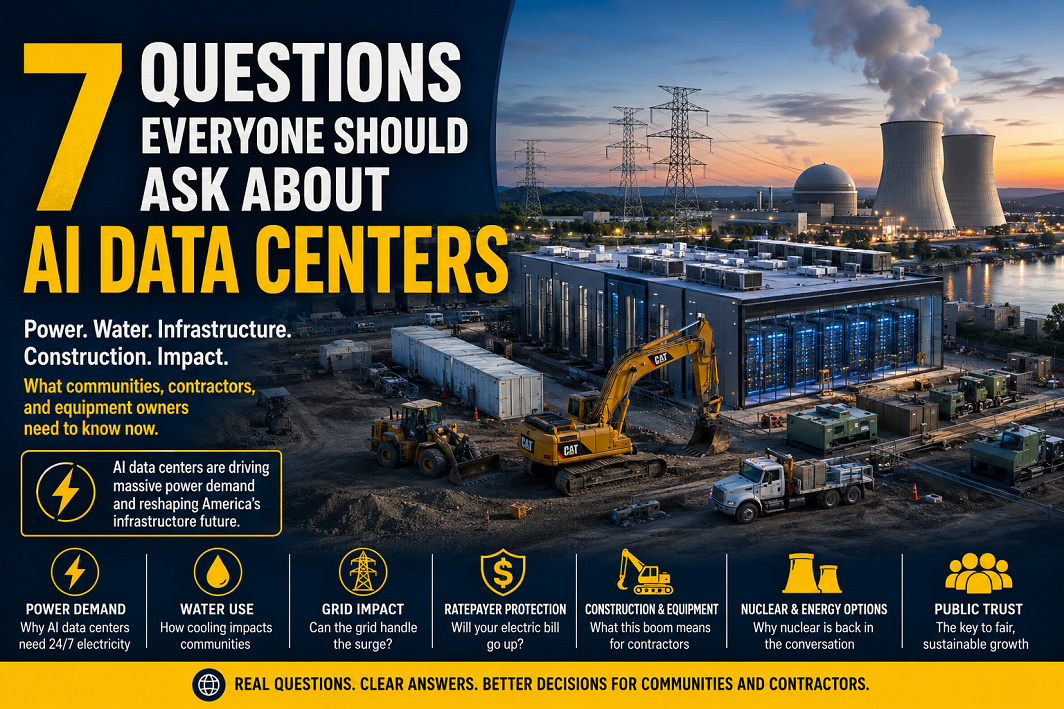
Why AI data centers are becoming one of America’s biggest power, water, construction, and heavy equipment stories
The data center boom is usually described as a technology story.
Artificial intelligence, cloud computing, chips, servers, and digital infrastructure get most of the attention. But the more important question may be much simpler:
Where is all the power going to come from?
That question matters far beyond the technology industry. It matters to homeowners worried about electric bills. It matters to communities being asked to approve massive new facilities. It matters to utilities trying to keep the grid reliable. It matters to contractors, equipment dealers, rental companies, and fleet owners trying to understand where the next construction cycle is headed.
A modern AI data center is not just a building full of computers. It is a major industrial power load that needs electricity around the clock, cooling around the clock, backup systems around the clock, and enough supporting infrastructure to keep everything online.
That is why AI data centers are becoming one of the most important infrastructure stories in the country.
The next phase of data center construction is no longer just about server halls. It is about substations, transmission upgrades, gas-fired generation, nuclear power discussions, backup generators, cooling systems, utility corridors, water access, fuel supply, ratepayer protection, and the heavy equipment required to build it all.
AI may live in the cloud, but its growth is being decided on the ground.
1. Is a server farm the same thing as an AI data center?
Not exactly.
A server farm is the computing equipment: rows of servers working together to store, process, host, or move digital information.
A data center is the full industrial facility built around that equipment. It includes the building, power feeds, backup generation, cooling systems, batteries, switchgear, transformers, fiber connections, security systems, fire suppression, maintenance access, and grid interconnection.
That difference matters.
The public may hear “data center” and picture a warehouse full of computers. Contractors see something larger: substations, generators, chillers, cooling towers, transmission lines, water systems, roads, drainage, security fencing, crane work, trenching, concrete pads, and months or years of construction before the first server ever goes live.
AI makes the distinction even more important.
Traditional server farms supported web hosting, email, business software, storage, streaming, and cloud services. AI data centers are different because they are built around extremely power-dense computing equipment, especially GPUs and other accelerators. Those systems draw large amounts of electricity and produce large amounts of heat.
In practical terms, an AI data center is not just a bigger server room. It is a power-and-cooling facility with computing equipment inside it.
2. Why is AI creating so much new power demand?
The demand is tied to AI, but the reason is worth explaining.
Artificial intelligence creates two major computing loads: training and inference.
Training is the process of building or improving a large AI model. It can require massive clusters of high-performance processors running for long periods.
Inference is what happens every time the trained model is used. Every prompt, search, summary, code request, image, video analysis, customer-service interaction, logistics tool, design program, or business workflow powered by AI requires computing capacity somewhere.
Training gets the headlines. Inference may become the longer-term load.
That is because AI is not just one software product. It is being built into search engines, phones, business software, customer service, logistics, medical tools, finance, manufacturing, education, engineering, construction planning, and industrial automation. If AI becomes part of everyday work, the power demand becomes a constant operating load.
The International Energy Agency projects that global data center electricity consumption will roughly double to around 945 TWh by 2030, with data center electricity use growing about 15% per year from 2024 to 2030. The IEA also says data centers are expected to account for nearly half of U.S. electricity demand growth between now and 2030. Read the IEA analysis on energy demand from AI.
That is why this issue is bigger than one company or one campus.
AI is becoming a new industrial load. The question is whether the power system can keep up.
3. Can the existing power grid support AI data centers?
In some regions, yes. In others, not without major upgrades.
The U.S. electric grid was built over decades to serve homes, businesses, factories, hospitals, schools, farms, and existing industrial users. Many regions are already dealing with aging infrastructure, transmission bottlenecks, generation retirements, permitting delays, weather stress, electrification, and rising demand from manufacturing, electric vehicles, and heat pumps.
Now add large AI data centers.
A single data center campus can require the kind of electricity demand once associated with a major industrial plant. Several campuses in one region can change the local power picture quickly.
That is why some utilities and grid operators are concerned about capacity, reliability, and who pays for upgrades. Reuters reported that PJM, the largest U.S. power grid operator, has been moving toward managing surging data center demand across its 13-state footprint and Washington, D.C. The same report said PJM’s options could include requiring data centers to fund new power development or face power cuts during peak demand to help avoid blackouts. Read the Reuters report on PJM and data center demand.
This is where the issue becomes public.
If a data center needs new substations, transmission lines, distribution upgrades, backup capacity, or new generation, who pays for it?
That question is turning data centers into a ratepayer issue, not just a technology or construction issue.
4. Will ordinary customers pay higher electric bills because of data centers?
That depends on how the project is structured.
Communities should not be asked to simply trust that data centers will not raise electric bills. The better question is:
What protections are written into the rules?
If a data center requires new power infrastructure, regulators should ask who benefits and who pays. The cost should follow the load. If the project creates the need, the project should carry the direct cost unless the upgrade also provides measurable benefits to the broader grid.
That does not mean data centers are bad. It means the public has a right to a fair deal.
Oregon has already moved in that direction. Utility Dive reported that Oregon regulators approved a large-load tariff framework for Portland General Electric customers exceeding 20 MW, requiring long-term contracts, customer-paid distribution upgrades, and surcharges for the largest projects. Read Utility Dive’s coverage of Oregon’s data center tariff framework.
OPB reported that data centers and other large industrial power users in Oregon will pay more to access electricity through Portland General Electric under the new framework. Read OPB’s report on Oregon’s large-load power policy.
That type of structure matters because it addresses the public’s most basic concern: ordinary households should not be forced to subsidize private industrial load growth without clear public benefit.
A fair data center power policy should answer several questions before a project is approved:
- What grid upgrades are required?
- Who pays for those upgrades?
- Will residential and small-business customers be protected?
- Will the project bring new power supply with it?
- Can the facility reduce load during grid emergencies?
- Will the infrastructure strengthen the regional grid or only serve the data center?
- Will the community receive tax base, jobs, utility improvements, or other public benefits?
- Will the data center disclose projected power and water use?
The public concern is reasonable. If a private facility creates public costs, the community deserves transparency.
5. Why not just use solar and wind?
Solar and wind can help power data centers. They are important parts of the future power mix. But they do not solve the entire problem by themselves.
The reason is simple: data centers need constant power.
Solar produces when the sun is shining. Wind produces when wind conditions are favorable. Data centers need electricity at night, during cloudy weather, during low-wind periods, during heat waves, during winter storms, and during peak grid stress.
That does not make renewables useless. It means renewable generation has to be paired with other parts of the power system: batteries, transmission, firm generation, backup power, demand flexibility, and better grid planning.
There is also a timing and delivery problem.
Renewable power can be generated at the wrong time or in the wrong place. If the grid cannot use it, store it, or move it when it is produced, operators may curtail generation. In plain English, that means potential power is reduced because the system cannot absorb it at that moment.
This is already happening in some regions. The U.S. Energy Information Administration reported that California’s grid operator curtailed 3.4 million megawatthours of utility-scale wind and solar output in 2024, a 29% increase from 2023. Solar accounted for 93% of curtailed energy in CAISO in 2024, largely because solar output can be high when demand is relatively low. Read EIA’s report on wind and solar curtailment.
That is not a failure of wind or solar by themselves. It is a failure of timing, transmission, storage, and grid capacity.
For data centers, the keyword is firm power.
They need electricity they can count on.
That is why developers are looking at several power paths at once:
- utility grid upgrades
- new substations
- transmission expansion
- behind-the-meter gas generation
- fuel cells
- large-scale battery storage
- renewable power contracts
- small modular nuclear reactors
- traditional nuclear power agreements
- backup diesel or gas generation
- hybrid systems using several sources
Every option has tradeoffs.
Natural gas can provide firm power but raises emissions and fuel-supply questions. Solar and wind can reduce emissions but need storage, transmission, or firm backup. Batteries help with short-duration balancing but may not solve every multi-day reliability problem. Nuclear can provide steady low-carbon power but involves cost, permitting, safety, waste, cooling, and long timelines.
There is no power source that avoids every cost.
6. Why is nuclear power back in the data center conversation?
Nuclear power is getting new attention because it offers something data centers value: large-scale, steady, carbon-free electricity.
Unlike solar and wind, nuclear plants are not dependent on sunlight or wind conditions. They can run continuously for long periods. That makes nuclear attractive to companies that need reliable power and also want to reduce carbon emissions.
But nuclear does not answer every public concern.
Nuclear projects are expensive, highly regulated, politically sensitive, slow to permit, and difficult to build. They require specialized engineering, security planning, cooling systems, grid interconnection, public acceptance, and long-term waste management.
Small modular reactors and microreactors are being discussed as future options for large power users, including data centers. But they still require sites, permits, foundations, controls, cooling, emergency planning, transmission or direct interconnection, and regulatory approval.
If nuclear becomes part of the data center power strategy, the public will ask two reasonable questions:
If a technology company can secure steady nuclear power, why can’t the surrounding community get cheaper power too?
If public infrastructure is involved, should private data center customers get priority over ordinary ratepayers?
Those questions cannot be brushed aside.
If a data center helps finance new nuclear capacity and that project strengthens the regional grid, improves reliability, and protects ratepayers, the public may view it differently. But if the project mainly serves one private customer while the community carries risk, cost, water use, land-use disruption, or transmission impacts, opposition will grow.
Nuclear may be part of the answer. But it will not eliminate the need for public trust.
7. Why is cooling becoming as controversial as power?
Power keeps the servers running. Cooling keeps them alive.
Every watt of electricity used by computing equipment eventually becomes heat. That heat has to be removed. The more powerful the chips, the denser the racks, and the harder the AI workload, the more serious the cooling problem becomes.
That is why water has become a major public concern.
Some data centers use cooling systems that rely on significant water capacity. Depending on the site and system, that water may come from municipal supplies, rivers, reservoirs, aquifers, reclaimed water systems, or other sources. In communities already concerned about drought, agriculture, water rights, or public supply, a large data center can quickly become controversial.
The Environmental and Energy Study Institute reported that a medium-sized data center can consume up to roughly 110 million gallons of water per year for cooling, while larger data centers can use up to 5 million gallons per day. Read EESI’s overview of data centers and water consumption.
Not all data centers use water the same way. Cooling choices vary. Some systems use more electricity to reduce water demand. Some use water more efficiently. Some can use reclaimed water. Some use closed-loop liquid cooling. Some use outside air when climate conditions allow. Some use hybrid systems.
But the public question remains:
Where does the water come from, and what happens during drought or peak summer demand?
Communities should ask for clear answers:
- How much water will the data center use?
- Will it use potable water, reclaimed water, groundwater, river water, or lake water?
- Will withdrawals affect public water supply, agriculture, ecosystems, or recreation?
- What happens during drought restrictions?
- Will the facility report water use publicly?
- Will cooling systems be designed to reduce peak summer water demand?
- Will the developer pay for water infrastructure upgrades?
- Will the site use closed-loop, dry, hybrid, or liquid cooling technology?
- Will the power plants serving the data center also require water?
That last question matters because data center water use is not limited to what happens inside the fence. Power generation can also consume water. A facility that reports only its direct cooling water may not tell the full story if the power plants serving it also use water.
The public has a right to see the full water picture.
What do AI data centers mean for contractors and heavy equipment?
For contractors and equipment owners, the data center power boom is not just a policy debate. It is a construction-market signal.
A power-constrained data center campus can require far more than a building contractor. It may need site contractors, utility contractors, electrical contractors, civil contractors, crane companies, trucking firms, fuel suppliers, rental companies, environmental contractors, concrete crews, fencing contractors, and service technicians.
The equipment demand can include:
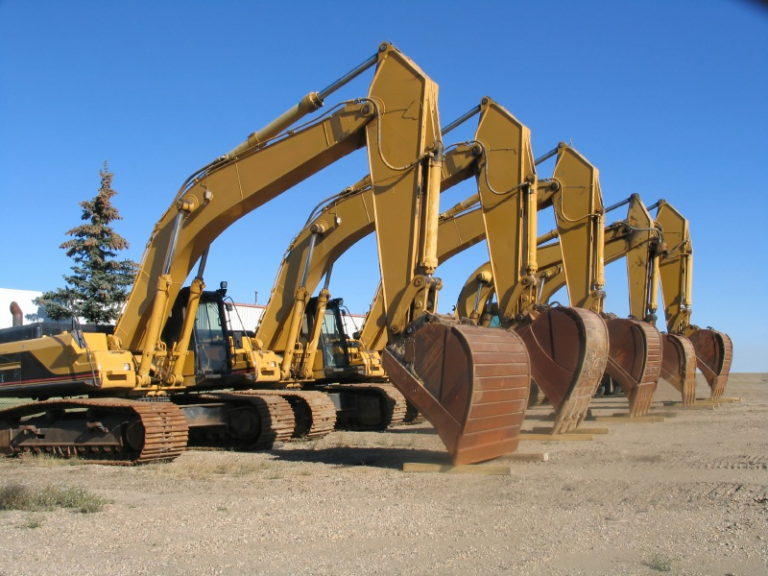
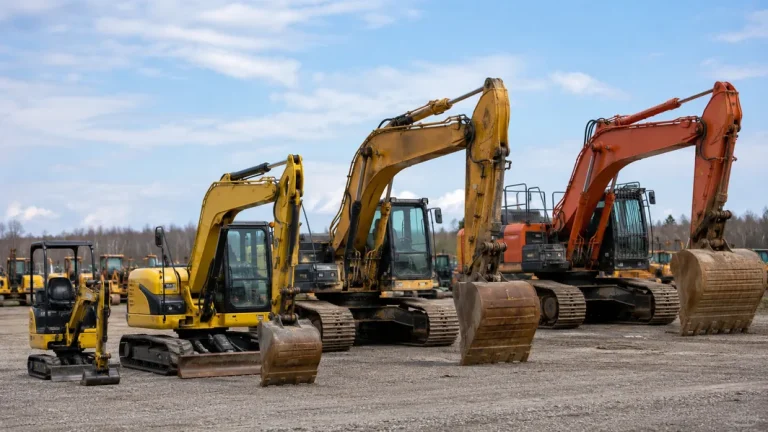
- excavators
- dozers
- wheel loaders
- articulated trucks
- motor graders
- compactors
- cranes
- telehandlers
- forklifts
- trenchers
- pumps
- generators
- light towers
- load banks
- water trucks
- fuel trucks
- lube trucks
- service trucks
- lowboys and heavy-haul support
The first machines on site are not the servers.
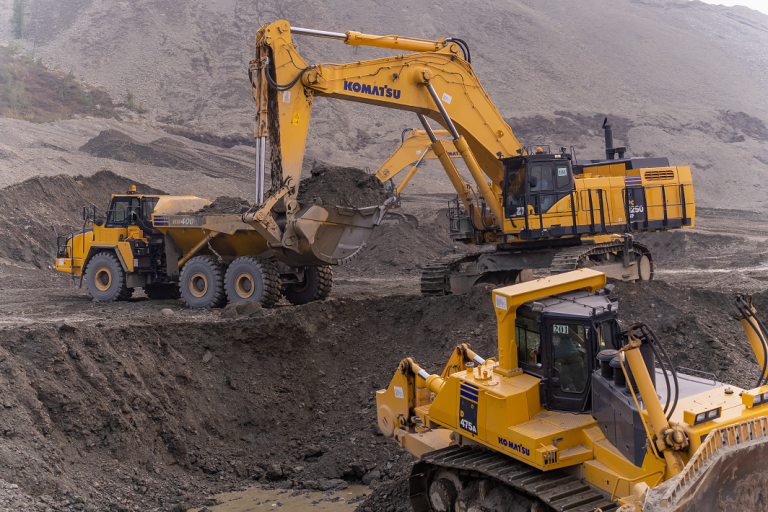
Dozers clear and shape the land. Excavators cut drainage, foundations, duct banks, and utility trenches. Trucks move material. Wheel loaders handle stone, pipe, pallets, and site support. Graders and compactors build access roads and stabilized work areas. Cranes place transformers, generators, switchgear, structural components, and cooling equipment. Telehandlers and forklifts keep mechanical and electrical materials moving.
The machines are familiar. The difference is the scale, schedule pressure, and support requirement.
A data center job can look like a building project, a utility project, an industrial project, a power project, and a logistics project all at once.
That favors contractors and rental companies that can support the whole jobsite, not just provide one machine.
For a broader look at why support infrastructure is becoming a major heavy equipment demand signal, see HEPLANET’s article on heavy equipment demand and support infrastructure.
Rental fleets may become part of the power system
Rental companies may be one of the biggest beneficiaries of this shift.
A large data center project can require aerial equipment, telehandlers, compactors, pumps, generators, light towers, temporary HVAC, load banks, storage, fuel tanks, and temporary offices.
But when power becomes the bottleneck, rental companies move closer to the center of the project. They are not just filling gaps in the fleet. They are supporting the operating system of the job.
That includes:
- temporary power before permanent service is available
- generators for trailers, tools, pumps, lighting, and testing
- load banks for generator and electrical system commissioning
- temporary cooling and HVAC
- pumps and water-handling equipment
- light towers for extended shifts
- telehandlers and forklifts for electrical and mechanical contractors
- aerial lifts for installation and commissioning
- service support to keep rental assets running
For contractors, that means the rental relationship matters. A rental house with strong power, service, and field support may be more valuable than one with only dirt equipment sitting in the yard.
This is also why data center work should be viewed through the same practical lens as equipment ownership, utilization, and uptime. HEPLANET covered that connection in Equipment Uptime and Cash Flow and Heavy Equipment Downtime Costs.
Data center demand will not lift every machine equally
The data center boom is real, but it does not help every equipment category the same way.
The strongest direct demand is likely to show up in machines connected to site development, utility installation, heavy lifting, power placement, cooling infrastructure, and rental support.
That includes excavators, dozers, wheel loaders, compactors, graders, cranes, telehandlers, forklifts, generators, pumps, trenchers, light towers, fuel trucks, service trucks, and heavy-haul support.
The indirect demand may show up in rental fleet growth, used equipment retention, power generation equipment, parts and service demand, component rebuilds, trucking, and electrical infrastructure support.
That distinction matters.
A contractor should not assume that “data centers are booming” means every machine in the fleet will increase in value. The question is which machines are tied to sitework, utility construction, electrical infrastructure, power generation, cooling, and support services.
A clean wheel loader may benefit if it fits site support, material handling, aggregate work, and utility construction. A crane fleet may benefit from transformer, generator, and structural placement. A rental power company may see stronger utilization. A low-hour excavator may remain in demand if utility and sitework contractors are busy. A service truck fleet may be stretched by extended jobsite hours.
But machines outside the direct construction path may not see the same lift.
Data center demand has to be read through the equipment chain, not the headline.
For readers tracking broader market signals, HEPLANET also explains how used equipment prices and demand can split by category in Used Equipment Market Price Signals.
The bigger issue: public trust
The data center debate should not be reduced to “pro-growth” versus “anti-growth.”
The better question is whether the project is structured fairly.
A community can support technology growth and still demand protections. Before approving major data center development, local governments and regulators should require clear answers on five issues:
Power plan: Where will the electricity come from?
Ratepayer protection: Who pays for grid upgrades?
Water plan: How much water will be used, and where will it come from?
Local benefit: What does the community receive in return?
Transparency: Will power use, water use, emissions, backup generator operation, and infrastructure obligations be publicly reported?
Those are not anti-technology questions. They are responsible infrastructure questions.
If data centers require new power plants, new transmission lines, new substations, new water infrastructure, new roads, and new backup systems, someone has to pay. If they use large amounts of water, someone has to measure the impact. If they need dedicated power, someone has to decide how that affects the rest of the grid.
At the same time, there can be real benefits.
Data center and power infrastructure projects can create construction jobs, utility work, tax base, road improvements, rental demand, equipment demand, and long-term maintenance work. They can also force investment into a grid that may need modernization anyway.
The question is whether the deal is balanced.
The heavy equipment market signal
The data center boom is part of a larger change in the heavy equipment market.
The question is no longer only:
Who needs machines?
The better question is:
Which projects have the power, fuel, freight, finance, service, and support infrastructure to keep machines working?
That is why data center power infrastructure matters. It sits at the intersection of construction, energy, utilities, rental, trucking, equipment finance, water policy, and field service.
For contractors, the opportunity is not just the data center building. It is the infrastructure around the building.
For equipment owners, the signal is not just square footage. It is power demand, substations, transmission access, backup generation, cooling requirements, utility corridors, and service support.
For ordinary power customers, the issue is whether the grid can grow fast enough without making electricity less reliable or more expensive.
Data centers are not just creating demand for buildings. They are creating demand for the infrastructure behind the buildings.
That includes the machines that clear the site, build the roads, dig the trenches, place the power equipment, support the crews, and keep the job running.
The data center boom is becoming a power-plant construction boom.
For the heavy equipment market, that may be where the real story begins.