Heavy Equipment Repair in the Age of AI and Robotics
As construction equipment becomes smarter, heavy equipment repair is moving toward AI diagnostics, robotics, predictive maintenance, technician training, and repair-access questions.
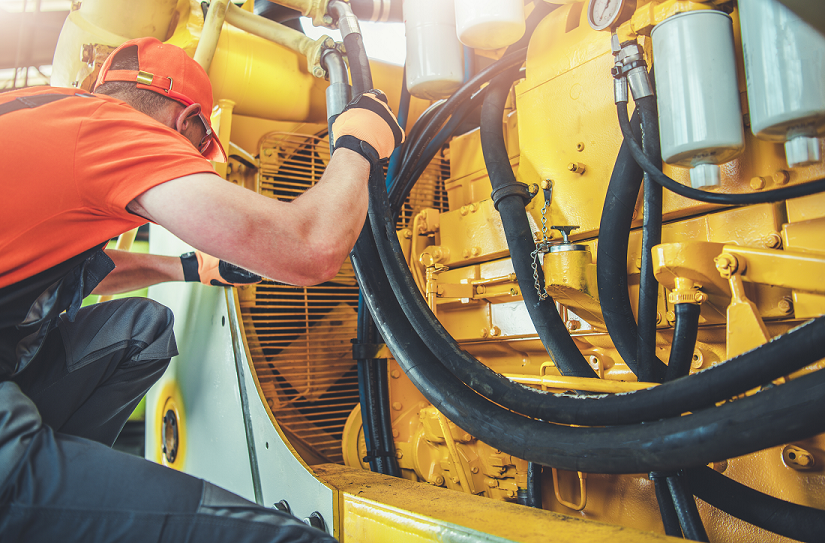
Heavy equipment repair has always depended on skilled technicians.
A machine can have the best engine, strongest frame, most advanced hydraulics, and highest production capacity in its class, but when it goes down, the question becomes simple: who can diagnose it, repair it, and get it back to work?
That question is becoming more complicated.
Modern construction equipment, mining equipment, agricultural equipment, and heavy machinery are no longer just mechanical assets. They are increasingly electronic, software-driven, sensor-equipped, emissions-controlled, telematics-connected, and data-producing systems.
For contractors, fleet managers, rental companies, dealers, and independent repair shops, heavy equipment repair is no longer only a mechanical issue. It is becoming a technology, software, data-access, and workforce issue.
Predictive maintenance, machine-health monitoring, remote diagnostics, AI-assisted troubleshooting, and automated fault detection are becoming part of normal fleet management. That is good news for uptime. Better diagnostics can help prevent machine-down failures. Telematics can reveal problems before they become expensive breakdowns. Software can help technicians identify root causes faster. Machine-health data can help owners plan repairs instead of reacting to emergencies.
But there is another side to the story.
As machines become smarter, they may also become harder for owners and independent technicians to repair without access to proprietary software, dealer-level diagnostic tools, OEM training, calibration procedures, machine data, and authorized repair platforms.
That raises a larger question for contractors, fleet managers, rental companies, dealers, independent repair shops, and equipment owners:
Will artificial intelligence and robotics make heavy equipment repair easier — or make machine owners more dependent on OEM-controlled support?
Predictive Maintenance Is Changing Heavy Equipment Repair
Predictive maintenance has always been part of good equipment ownership.
Experienced heavy equipment mechanics and operators have long listened for unusual sounds, watched for leaks, checked temperatures, inspected filters, monitored oil condition, tracked service intervals, and recognized patterns before a failure occurred. A skilled technician could often tell that a hydraulic pump, engine, final drive, undercarriage, cylinder, or electrical system was beginning to fail before the machine fully stopped working.
What has changed is the way newer machines collect, organize, and present that information.
Modern heavy equipment can use sensors, electronic control modules, fault codes, telematics, machine-health dashboards, remote-monitoring systems, and predictive maintenance software to bring problems to the surface earlier. Instead of relying only on the mechanic’s eye, ear, and experience, fleet owners can now receive alerts, trend data, and diagnostic information before a small problem becomes a major failure.
That can be a major advantage.
But it also changes the repair relationship. If the machine knows what is wrong, who gets access to that information?
The owner?
The dealer?
The OEM?
The independent mechanic?
The rental company?
The software provider?
In the old model, a skilled mechanic with tools, experience, parts access, and service information could solve many problems. In the new model, that same mechanic may also need diagnostic software, electronic access, calibration rights, fault-code interpretation, and OEM-specific training.
The question is no longer only whether a machine can be repaired.
The question is who is allowed and equipped to repair it.
Heavy Equipment Repair Is Facing a Technician Shortage
The industry is facing this technology shift while also dealing with a technician pipeline problem.
The U.S. Bureau of Labor Statistics (BLS) projects thousands of annual openings for heavy vehicle and mobile equipment service technicians, as well as diesel service technicians and mechanics, with many openings tied to retirements, workforce exits, and workers transferring to other occupations.
[EXTERNAL LINK HERE: Link “U.S. Bureau of Labor Statistics (BLS)” to the BLS page for Heavy Vehicle and Mobile Equipment Service Technicians.]
That matters because heavy equipment repair is not easy work. It is physical, technical, dirty, demanding, and increasingly digital. A technician may need to understand diesel engines, alternative power systems, hydraulics, electrical systems, emissions systems, undercarriages, final drives, telematics, sensors, fault codes, and diagnostic procedures.
At the same time, younger workers are entering the labor force with different experiences. Fewer grew up around farms, equipment yards, tractors, trucks, engines, welders, and hands-on mechanical repair. More grew up around computers, phones, gaming systems, coding, robotics, automation, and digital tools.
That does not mean younger workers cannot become great heavy equipment technicians. But it does mean the industry may need to rethink how the job is presented.
The technician of the future may not be only a traditional mechanic. The role may become a hybrid of mechanic, electrician, software interpreter, diagnostic analyst, robotics operator, and machine-health specialist.
Could Robots Become Part of Heavy Equipment Repair?
This is where the conversation becomes more forward-looking.
Humanoid robots and task-specific robots are advancing quickly in manufacturing, construction, logistics, inspection, and industrial operations. Some robotics companies are already testing humanoid robots in industrial settings, and construction technology companies are exploring robotic systems for inspection, repetitive work, safety, and productivity.
[EXTERNAL LINK HERE: Link “humanoid robots” or “robotics in construction” to a credible source such as McKinsey, Reuters, Construction Dive, Equipment World, or an OEM/robotics company source.]
Those examples are not the same as repairing a bulldozer in the mud or rebuilding an excavator hydraulic system in the field. But they show the direction of travel. Robots are beginning to move beyond simple repetitive factory work and into more complex physical environments.
So it is fair to ask:
If a humanoid robot is built to work in a human environment, why could it not eventually perform many heavy equipment repair tasks?
A humanoid robot could theoretically carry massive diagnostic capability. It could connect to machine data. It could scan components. It could access repair procedures. It could lift heavy parts. It would not get tired. It could work in dangerous conditions. It could repeat procedures with precision. It could be guided by AI, remote technicians, OEM repair databases, or machine-health systems.
That does not mean fully autonomous field repair is close. Heavy equipment repair is difficult because every machine and jobsite is different. Real-world service work involves seized bolts, worn pins, oil leaks, contamination control, bent guards, missing covers, rust, mud, dust, weather, poor access, modified machines, and incomplete repair history.
But those challenges do not make robotic repair impossible. They may simply shape how it arrives.
The First Heavy Equipment Repair Robots May Be Specialized
The future may not begin with one humanoid robot that can repair every machine from top to bottom.
It may begin with specialized robotic systems.
An inspection robot may crawl around or under equipment and identify leaks, cracks, loose hardware, abnormal heat, damaged guards, worn undercarriage components, or hydraulic contamination risks.
A diagnostic robot may connect to a machine, read fault codes, compare sensor data, review service history, and guide the next troubleshooting step.
A hydraulic-service robot may support hose replacement, contamination-control procedures, pump testing, or cylinder handling.
An engine-service robot may assist with engine removal, component lifting, bolt sequencing, torque procedures, and repeatable assembly work.
A welding or line-boring robot may support precision repair in controlled shop environments.
An undercarriage robot may help inspect track links, rollers, idlers, sprockets, shoes, pads, bolts, and wear patterns.
In that future, the human technician may not disappear. The technician may become the person who supervises, programs, guides, audits, and corrects the robotic repair process.
The mechanic of the future may not turn every wrench by hand.
The mechanic of the future may command the systems that turn the wrench.
Robotics Could Make Heavy Equipment Repair Careers More Attractive
The heavy equipment industry often talks about the technician shortage as a recruiting problem. But it may also be a job-design problem.
For decades, the trade has been associated with hard physical work: crawling under machines, handling heavy parts, fighting rusted hardware, dealing with hydraulic oil, working in heat and cold, and solving problems under pressure.
That work will not disappear quickly. But if robotics, AI diagnostics, remote support, and machine-health systems become part of the job, the industry may have a new way to attract younger workers.
Instead of presenting the career only as wrench-turning, the industry could present it as a high-skill technology trade involving diesel engines, electric and alternative power systems, hydraulics, electrical systems, telematics, robotics, AI-assisted diagnostics, machine software, sensor systems, predictive maintenance, remote repair support, and fleet uptime strategy.
That is a different story.
It may appeal to students who are interested in technology but do not want a traditional office job. It may also help the industry bridge the gap between hands-on mechanical work and digital systems.
The goal should not be to replace the technician identity. The goal should be to expand it.
Heavy Equipment Repair May Become More Dependent on OEM Software
The promise of AI and robotics is that machines become easier to diagnose, easier to operate, easier to monitor, and easier to maintain.
But the risk is that the opposite happens.
If the machine requires proprietary software, restricted diagnostic access, OEM-controlled data, dealer-only calibration tools, and robotic systems tied to authorized service networks, then technology could make heavy equipment repair more centralized instead of more accessible.
This is already part of the broader right-to-repair debate. Right-to-repair discussions often center on whether equipment owners and independent repair providers should have access to the tools, software, diagnostic information, and repair data needed to service modern machines.
[EXTERNAL LINK HERE: Link “right-to-repair debate” to the National Conference of State Legislatures right-to-repair page or another credible right-to-repair source.]
Heavy equipment owners face a similar issue.
The concern is not that OEMs should be excluded from repair. OEMs and dealers provide essential training, warranty support, parts systems, engineering updates, and technical expertise. The concern is whether equipment owners will retain practical repair choice as machines become more software-dependent.
If a contractor owns a machine but cannot fully diagnose, calibrate, reset, repair, or authorize work without dealer-controlled tools, then ownership becomes more limited.
That may be acceptable for large fleets with strong dealer relationships. It may be a bigger problem for small contractors, independent repair shops, farmers, municipalities, used equipment buyers, and export markets.
The Emissions Era Offers a Warning for Equipment Ownership
The industry has seen a version of this before.
The emissions era brought important environmental goals, but it also introduced major changes in machine design, engine systems, service requirements, and ownership cost. As emissions standards tightened, manufacturers had to redesign machines more frequently, add new engine and aftertreatment systems, and support more complex service needs.
For many owners, the result was higher purchase cost, more complicated troubleshooting, and years of reliability challenges as the industry adapted. Some machines became harder to export into markets where fuel quality, service infrastructure, or diagnostic support could not match the technology built into the equipment.
That history matters because AI, autonomy, robotics, and advanced diagnostics could create another version of the same question.
Technology should make machines better. It should improve uptime, productivity, diagnostics, manufacturing efficiency, safety, and repair planning.
But if technology increases purchase prices, shortens model cycles, restricts repair access, complicates export markets, and creates deeper dependence on authorized service channels, then the ownership model becomes more expensive and less flexible.
That is the technology paradox facing the heavy equipment industry.
Global Equipment Markets May Split Again
Advanced machine technology does not affect every region equally.
North America, Europe, Japan, Australia, and major mining markets may adopt more AI-assisted diagnostics, autonomous systems, robotics, electrification, and machine-health platforms because they have stronger dealer networks, better data infrastructure, better financing access, cleaner fuel systems, and more capital-intensive operations.
But many developing markets may continue to depend on older, simpler, more repairable machines.
That is not because those markets do not value technology. It is because machine ownership depends on local reality. If fuel quality, parts supply, technician training, dealer coverage, diagnostic software, and capital access are limited, then a simpler machine may be more valuable than a smarter machine that cannot be supported locally.
This could deepen the split between technology-rich equipment markets and repair-practical equipment markets.
In advanced markets, fleets may move toward autonomous operation, robotic repair assistance, dealer-integrated diagnostics, machine-health platforms, and software-supported service contracts.
In developing markets, buyers may continue seeking machines that can be repaired with available tools, local technicians, used parts, aftermarket parts, and practical mechanical knowledge.
The question is whether the next generation of machines will become more globally useful or less exportable.
Contractors Must Rethink Heavy Equipment Repair and Ownership
For contractors, the decision may not be simply whether to buy the newest machine.
The decision may become:
Do we want the most technologically advanced machine, or the machine we can best support?
For some fleets, the advanced machine will be the right answer. Mines, quarries, large contractors, rental companies, and high-utilization operations may benefit from telematics, autonomy, diagnostics, software support, and dealer-backed uptime programs.
For other owners, lower-complexity machines may remain attractive. A contractor may prefer a machine that is easier to understand, easier to repair locally, less software-dependent, and less tied to a single support channel.
That does not make the simpler machine inferior.
In some applications, simplicity is a competitive advantage.
Frequently Asked Questions About Heavy Equipment Repair, AI, and Robotics
How is AI changing heavy equipment repair?
AI is changing heavy equipment repair by helping machines collect, analyze, and report diagnostic information earlier. AI-assisted diagnostics can help identify fault patterns, predict failures, and guide technicians toward the most likely repair path before a machine suffers major downtime.
Will robots replace heavy equipment technicians?
Robots are unlikely to replace all heavy equipment technicians quickly, but they may change the job. Future technicians may use robotic repair assistants, AI diagnostics, remote support tools, and machine-health data to inspect, diagnose, and repair equipment more efficiently.
Why is diagnostic access important in heavy equipment repair?
Diagnostic access is important because modern machines often require software, fault-code interpretation, calibration tools, and electronic service information. Without access to those tools, independent repair shops and equipment owners may become more dependent on OEM dealers.
What is predictive maintenance in heavy equipment?
Predictive maintenance uses machine data, service history, sensors, telematics, and diagnostic trends to identify problems before they cause equipment failure. In heavy equipment repair, predictive maintenance can help reduce downtime and plan repairs before a machine stops working.
How could robotics affect heavy equipment repair?
Robotics could affect heavy equipment repair by supporting inspection, diagnostics, component handling, repetitive repair steps, remote service, and technician safety. Over time, robotics may help technicians work faster, reduce physical strain, and improve repair consistency.
HEPLANET Takeaway
AI, robotics, predictive maintenance, and autonomous systems are not just technology trends. They are ownership issues.
Heavy equipment will continue becoming smarter. Construction equipment, mining equipment, agricultural equipment, and rental fleets will continue adding software, telematics, sensors, predictive maintenance tools, AI diagnostics, and automated systems.
The technician role will continue changing. Robotics will continue improving. Software will continue moving deeper into the machine.
That does not mean human technicians disappear. It may mean the best technicians become more valuable because they understand both the machine and the systems around the machine.
The future of heavy equipment repair may not be only about who can turn the wrench.
It may be about who controls the data, the software, the robot, and the decision-making system behind the wrench.
For contractors, fleet managers, equipment owners, and independent repair shops, this is not a distant technology discussion. It is a future ownership question.
The machine still matters.
But the ability to diagnose, repair, support, and control that machine may matter even more.