John Deere X-Tier Wheel Loaders and the Future of Autonomous Jobsites
John Deere X-Tier wheel loaders are not autonomous machines, but they help show where production equipment is heading as jobsites become smarter, more connected, and more focused on cost per ton.
Autonomous haul trucks get most of the attention when people talk about the future of heavy equipment. But a haul truck is only one part of the production cycle.
This topic builds on our recent heavy equipment daily briefing, where construction demand, auction pricing, data centers, and copper mining all pointed toward a more productivity-focused equipment market.
If trucks can run longer, cycle more consistently, and spend less time waiting between shifts, the rest of the jobsite has to adjust. Loaders, support machines, maintenance crews, dispatch systems, and parts networks all become part of the same production question: can the whole system keep up?
Autonomous machines do not need lunch breaks, bathroom breaks, shift changes, or recovery time after a hard day. They do not get tired, distracted, or inconsistent near the end of a long shift. That does not make them better than experienced operators, but it does make them more predictable in repetitive production work.
And once the haul side of the operation becomes more predictable, the loading side has to become more productive.
That is why John Deere’s X-Tier wheel loader expansion matters. Deere introduced the 844 X-Tier and 904 X-Tier wheel loaders as production-class machines designed to help high-production customers move more material while burning less fuel. Deere says the new machines combine electrified drivetrain technology, intelligent machine controls, and optional operator-awareness features to improve productivity and value.
John Deere X-Tier Wheel Loaders Are Part of a Larger Production Shift
The first thing to understand is that John Deere X-Tier wheel loaders should not be viewed only as new loader models. They are part of a broader shift in the heavy equipment industry.
For decades, production equipment has been judged by familiar measurements: horsepower, bucket capacity, payload, fuel burn, cycle time, reliability, and resale value. Those still matter.
But as autonomous equipment enters quarry, mining, and repetitive earthmoving applications, the larger question becomes how the entire production chain works together.
A haul truck that can run more consistently does not automatically make an operation more productive. If that truck spends too much time waiting to be loaded, the benefit is reduced. If the loader cannot keep pace, the loader becomes the bottleneck. If service support is weak, downtime can erase the productivity advantage.
That is why the future of heavy equipment is not just autonomous trucks. It is a more coordinated production system where loading, hauling, maintenance, diagnostics, machine availability, and parts support all affect cost per ton.
Why Production Loaders Have to Become Smarter
Wheel loaders are often at the center of high-production work. In quarry, aggregate, stockpile, and truck-loading applications, the loader sets the rhythm for the rest of the site.
Every pass matters. Every bucket fill matters. Every slip in the pile, every inconsistent load, every wasted movement, and every unplanned stop affects production.
That is why features such as traction control, intelligent drivetrain behavior, bucket-fill support, operator assistance, and connected diagnostics are not just technology upgrades. They are productivity tools.
Deere says the 844 and 904 X-Tier models feature the John Deere Electric Variable Transmission, or EVT. The company describes EVT as an electronically managed drivetrain system designed for smoother operation, faster response, and optimized efficiency in demanding applications. Deere also says the new Pile Slip Assist feature helps improve traction and bucket fill while helping reduce tire wear, which is one of the largest operating costs in this loader size class.
That is the deeper point. A smarter loader is not valuable simply because it has more technology. It is valuable if that technology helps the machine fill trucks faster, work more consistently, reduce wasted motion, lower tire wear, and stay productive longer.
Autonomous Haul Trucks Raise the Standard for the Machines Around Them
John Deere has already shown where the autonomous side of the industry is heading. Deere’s 460 P-Tier autonomous articulated dump truck was introduced for quarry operations and is designed to handle repetitive material-hauling tasks. Pit & Quarry reported that Deere’s second-generation autonomy kit combines computer vision, AI, and cameras to help machines navigate their environment.
That does not mean the X-Tier loaders are autonomous machines. They are not being presented that way.
But they belong to the same broader industry movement: using technology to make production equipment more consistent, more efficient, and easier to support.
An autonomous haul truck can create pressure on the rest of the jobsite. If the truck can cycle longer and more predictably, then loading equipment must also become more consistent. The loader cannot be the weak link.
That is where machines like John Deere X-Tier wheel loaders fit into the bigger picture. They are part of the bridge between traditional manually operated equipment and more automated production systems.
Quarries Are a Natural Proving Ground for Smarter Jobsites
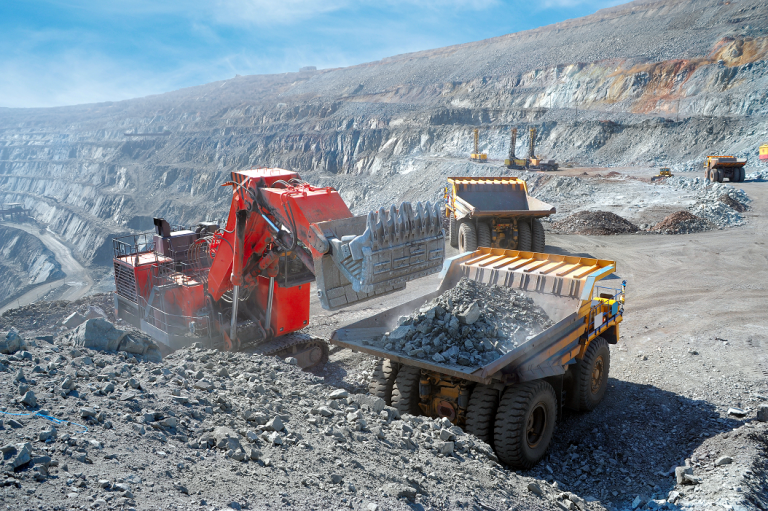
Quarries and aggregate operations are especially important in this discussion because they often involve repetitive routes, repeated loading cycles, controlled site environments, and high material volumes.
That makes them a logical proving ground for autonomous haul trucks and smarter production equipment.
A quarry does not need every machine to be fully autonomous on day one. It needs the production system to become more predictable. Better loading consistency, better truck cycle control, better machine monitoring, and better service planning can all improve production before full autonomy becomes common across the entire site.
In that environment, loader performance becomes even more important. A loader that can reduce slip, maintain bucket fill, improve cycle consistency, and lower tire wear can support the same production goal as autonomous haulage: moving more material with less waste and less downtime.
The Human Side of Machine Productivity
It is important to talk about autonomy honestly.
Experienced operators bring judgment, feel, problem-solving ability, and site awareness that machines still cannot fully replace in many applications. A good operator can hear, feel, and see things that are difficult to reduce to a simple production formula.
But repetitive production work also has a human rhythm. People get tired. They need breaks. They have good days and bad days. They may slow down near the end of a long shift. They may be affected by heat, dust, stress, distractions, or fatigue.
Autonomous machines change that rhythm. They may not be “better” in the human sense, but they can be more consistent in repetitive work. That consistency changes expectations for the rest of the jobsite.
If the haulage side becomes more predictable, loading has to keep up. If production windows get longer, service planning has to improve. If machines run harder for more hours, parts availability and maintenance discipline become even more important.
The future jobsite may have fewer random slowdowns in one part of the operation, but that also means weak points elsewhere become more visible.
Technology Does Not Eliminate Uptime Risk
There is a temptation to think smarter machines automatically solve production problems. They do not.
More advanced equipment can improve efficiency, but it can also raise the importance of diagnostics, technician training, software support, parts availability, and dealer capability.
Deere says the 844 and 904 X-Tier wheel loaders are supported by John Deere Operations Center, remote diagnostics, service and maintenance plans, and electric-drive component coverage for qualified components.
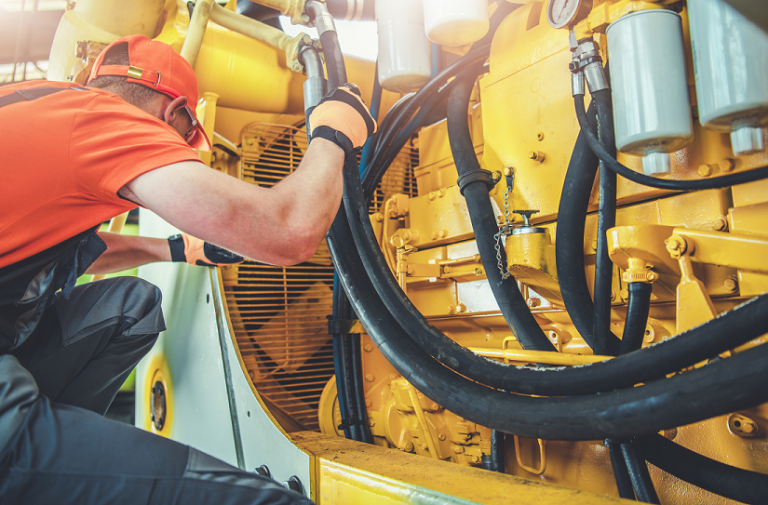
That support matters because a machine with advanced drivetrain controls still needs tires, filters, hydraulic components, cooling system maintenance, pins, bushings, sensors, electrical support, and skilled service. A connected machine can help identify issues earlier, but someone still has to respond, diagnose, repair, and return the machine to production.
This is why equipment downtime and ownership cost should be part of every major machine-buying decision.
Buyers should also consider dealer support and parts availability before assuming new technology will automatically lower operating cost.
For fleet owners, that means the purchase decision should not stop at the spec sheet.
The right questions include:
Can the dealer support this machine quickly?
Are parts available when the machine is down?
Do technicians understand the machine’s drivetrain, electronics, and diagnostic systems?
Can the machine be maintained without long delays?
Will the productivity gains outweigh the added complexity?
The more production depends on a connected system of loaders, trucks, telematics, diagnostics, and service support, the more important the support network becomes.
Cost Per Ton Is the Real Measure
The heavy equipment industry often talks about horsepower, payload, bucket size, and model class. Those are important, but production owners usually care about something more practical: how much does it cost to move material?
That is where the John Deere X-Tier wheel loaders story becomes bigger than one product launch.
Deere says the 844 and 904 X-Tier loaders can deliver up to 15% fuel savings in Standard Mode, up to a 5% productivity increase in Performance Mode, and up to a 4% total cost of ownership reduction compared with previous models.
If a loader can reduce fuel burn, improve traction, fill trucks more consistently, lower tire wear, and reduce cycle time, it can affect cost per ton. If autonomous haulage can run more consistently, it can also affect cost per ton. But neither one works in isolation.
The best production sites will not be the ones that simply buy the newest machine. They will be the ones that coordinate the entire system: loading, hauling, maintenance, operator support, parts planning, and machine data.
HEPLANET Takeaway
John Deere X-Tier wheel loaders should be viewed as part of a larger shift in production equipment.
The future jobsite is not just about autonomous trucks replacing human-driven trucks. It is about the entire production chain becoming more consistent, more connected, and more focused on cost per ton.
Autonomous haulage may raise expectations for cycle consistency and machine availability. That puts pressure on loaders, support equipment, maintenance teams, dealers, and parts networks to keep pace.
The machines feeding autonomous or semi-autonomous production systems will need to become faster, smarter, more reliable, and easier to support.
That is the real signal behind Deere’s X-Tier expansion: production equipment is evolving for a jobsite where every machine, every cycle, and every hour of uptime matters.