HEPLANET Daily: Heavy Equipment Market Signals for May 26, 2026
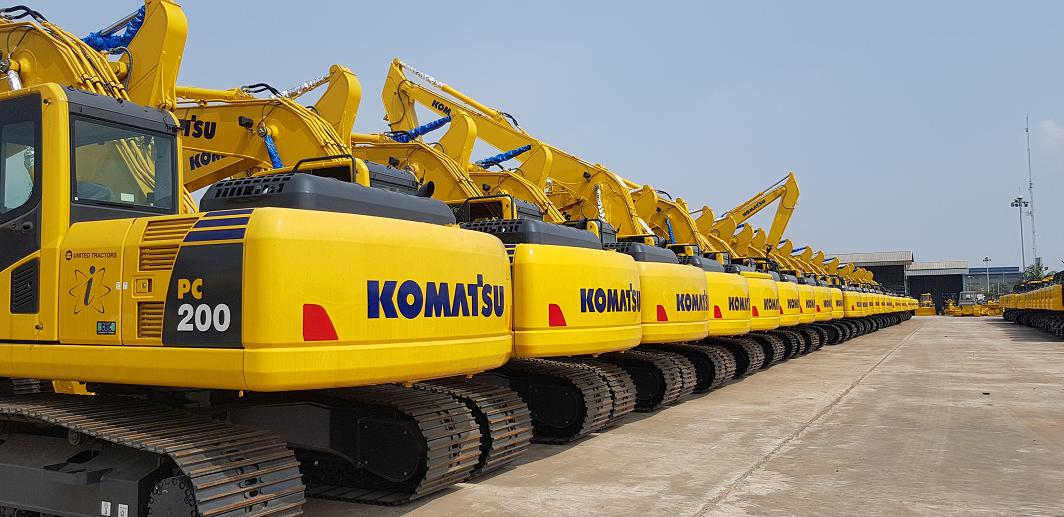
Today’s heavy equipment market signals show an industry being shaped by autonomy, AI-related infrastructure demand, global OEM competition, regional manufacturing strategy, rental flexibility, and rising fleet support requirements.
The biggest developments include Caterpillar’s continued push to expand autonomy beyond mining, growing construction demand tied to AI infrastructure, Komatsu’s exposure to tariff and global pricing pressure, Volvo Construction Equipment’s investment in regional production, and continued focus on rental, aftermarket support, and equipment technology.
For more ongoing coverage, visit HEPLANET’s Heavy Equipment Industry News and Construction Equipment Market sections.
Caterpillar Pushes Autonomy Beyond Mining
Caterpillar continues to position autonomy as a technology that can move beyond large mining operations and into quarry, aggregates, and construction-material applications.
The company’s broader autonomy messaging includes excavators, loaders, haul trucks, dozers, and compactors, with a focus on autonomous navigation, real-time data processing, truck loading, grading, hauling, and material handling. Caterpillar has also highlighted autonomous technology for off-road machines that move rock, soil, and minerals, which makes quarry and aggregates applications a natural next step. Read Caterpillar’s autonomy announcement.
This matters because quarry operations sit between mining and mainstream construction. Aggregates support roadbuilding, asphalt, concrete, utilities, industrial construction, and data-center development. If autonomous systems become more practical in quarry operations, they could affect production planning, labor requirements, fleet utilization, safety programs, and maintenance strategies.
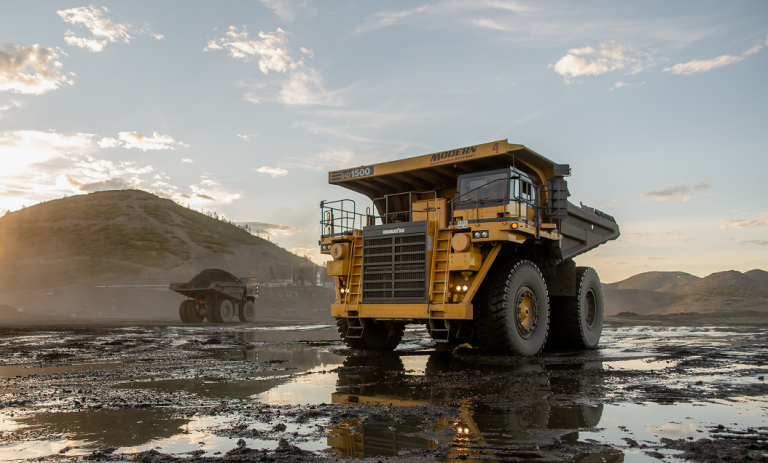
Caterpillar has also previously described autonomous technology deployment in the aggregates industry, including work involving autonomous truck technology in quarry applications. Read Caterpillar’s autonomous truck update.
For related coverage, see HEPLANET’s Equipment Technology section.
AI Infrastructure Continues to Support Construction Equipment Demand
AI infrastructure remains an important indirect demand driver for heavy equipment. Data centers, semiconductor projects, power infrastructure, utilities, transmission systems, industrial construction, and site-development work all require significant equipment support.
Before a data center or semiconductor facility becomes a technology asset, it is first a construction project. These projects can require grading, excavation, underground utilities, concrete work, aggregates, paving, cranes, backup power systems, access roads, and transmission infrastructure.
For the equipment industry, the key point is that AI growth is not only a software or computing story. It is also a construction, power, utility, aggregates, and equipment-utilization story.
HEPLANET will continue tracking this through its Infrastructure and Construction Markets coverage.
Komatsu Faces Tariff Pressure and Global Competition
Komatsu remained in focus after Reuters reported that a U.S.-China trade truce could reduce the company’s tariff impact by about $140 million. Reuters reported that Komatsu had faced a projected tariff burden tied partly to Chinese steel used in U.S.-made machines, while also facing continued global competition from lower-cost Chinese manufacturers. Read the Reuters report on Komatsu and tariffs.
The issue is broader than one manufacturer. Trade policy, sourcing decisions, global competition, and production location can all affect equipment pricing, supply-chain planning, product availability, and long-term support expectations.
For contractors and fleet owners, global OEM competition is not just about purchase price. Machine availability, dealer support, parts supply, resale value, service infrastructure, repair options, and uptime risk all influence the real cost of ownership.
For more related coverage, see HEPLANET’s Equipment Ownership and Mining Equipment News sections.
Volvo CE Expands Regional Production Strategy
Volvo Construction Equipment continues to emphasize regional production, supply-chain resilience, and technology-focused fleet modernization.
Volvo CE announced a strategic investment in global crawler excavator production across key production locations, including South Korea, Sweden, and the United States. The company said the investment is intended to meet customer demand, reduce reliance on long-distance logistics, and mitigate supply-chain risks. Read Volvo CE’s global crawler excavator production announcement.
Volvo CE also announced expanded production in North America, including crawler excavators and large wheel loaders at its Shippensburg, Pennsylvania facility. Read Volvo CE’s North America production update.
This reflects a wider OEM trend. Manufacturers are competing not only on machine specifications, but also on production flexibility, localized supply, emissions strategy, dealer support, parts availability, and the ability to respond to regional demand.
Rental and Flexible Fleet Strategies Remain Important
Rental and flexible fleet models continue to play an important role as contractors manage project timing, equipment availability, interest costs, machine pricing, and technology uncertainty.
As equipment becomes more expensive and more technology-driven, some contractors may continue owning core production machines while renting specialized, high-cost, or short-term-use equipment. This approach can help manage utilization risk, especially when project schedules are uncertain or equipment technology is changing quickly.
The rental trend also reflects a broader shift in fleet planning. Contractors are not only asking whether they need a machine. They are also asking whether that machine should be owned, rented, leased, delayed, or replaced with a different fleet strategy.
For related coverage, see HEPLANET’s Rental and Fleet Management section.
Aftermarket Support Becomes More Important as Fleets Age
Aftermarket support continues to grow in importance as machine prices rise, fleets age, and equipment owners look for more ways to keep machines productive.
This includes rebuilds, reman programs, hydraulic repair, seal kits, undercarriage management, diagnostics, used components where appropriate, and support for mixed-age fleets.
This trend does not reduce the importance of OEM dealer support. Instead, it reflects the reality that many equipment owners need multiple reliable support paths. Depending on machine age, application, downtime risk, parts availability, dealer strength, and repair cost, fleets may rely on OEM dealers, reman programs, quality aftermarket suppliers, used components, independent repair shops, or a combination of those options.
For older machines, parts availability and repair options can directly affect uptime, repair economics, and useful equipment life.
For more related coverage, visit HEPLANET’s Parts, Service and Aftermarket section.
Infrastructure Demand Is Also a Materials and Supply-Chain Story
Infrastructure demand continues to support long-cycle equipment use, but infrastructure stories are not only about machines on job sites.
Large infrastructure programs can also drive demand for aggregates, steel, asphalt, concrete, hauling, paving equipment, earthmoving, utilities, roadbuilding support, and supply-chain capacity.
A quarry expansion, steel-processing investment, port project, utility buildout, bridge program, road package, or energy project can all become a signal of future equipment activity and parts demand.
HEPLANET will continue tracking these signals through its Infrastructure and Construction Markets section.
Heavy Equipment Becomes More Software- and Data-Driven
The heavy equipment industry continues moving toward software, data, telematics, predictive maintenance, fleet optimization, diagnostics, autonomy, and connected-machine ecosystems.
As OEMs invest in automation and digital fleet systems, contractors and fleet owners are evaluating more than horsepower, breakout force, lifting capacity, fuel burn, and purchase price. Buyers are also looking at machine-health visibility, serviceability, diagnostic support, software tools, data access, maintenance planning, and mixed-fleet management.
This shift will continue affecting equipment decisions, dealer support models, rental fleets, maintenance planning, and long-term ownership costs.
For related coverage, see HEPLANET’s Equipment Technology section.
Items Not Worth Standalone Coverage Today
Some industry items remain useful as background but are not strong enough for standalone coverage.
Generic top-OEM rankings, weak market-size prediction articles without operational insight, recycled trade-show preview material, and generic electric-equipment hype without real production or fleet-use evidence should be treated carefully.
These topics may support broader coverage, but they should not drive industry reporting unless tied to real deployments, ownership decisions, fleet economics, equipment demand, parts demand, infrastructure activity, or measurable market changes.
What to Watch Next
Quarry Autonomy
Caterpillar’s continued autonomy push could make quarry and aggregates operations an important test ground for production technology, labor efficiency, safety systems, and fleet automation.
AI-Driven Construction Demand
Data centers, semiconductor projects, utilities, power infrastructure, and industrial mega-projects may continue creating demand for earthmoving, aggregates, paving, trenching, cranes, and support equipment.
OEM Production and Supply Chains
Komatsu’s tariff exposure and Volvo CE’s regional production investments show how trade policy, sourcing, manufacturing location, and regional demand are shaping OEM strategy.
Equipment Aftermarket and Fleet Support
Aging fleets, high replacement costs, and repair complexity continue to support demand for rebuilds, reman programs, hydraulic repair, undercarriage work, diagnostics, and parts availability.
Ownership Versus Rental
Contractors may continue reassessing which machines should be owned, rented, leased, or delayed as machine prices, interest rates, project schedules, and technology complexity change.
Daily Takeaway
Today’s heavy equipment market signals show an industry being reshaped by infrastructure demand, quarry automation, AI-related construction, OEM supply-chain strategy, rental flexibility, aftermarket support, and software-driven fleet management.
The larger story is not one product launch or one forecast. It is the way technology, global competition, infrastructure investment, equipment availability, and ownership cost are changing how contractors, fleet owners, dealers, rental companies, and suppliers plan for the next equipment cycle.