Heavy Equipment Demand Is Moving Behind the Machine
Heavy equipment demand is moving behind the machine.
The next signal may not come from one machine category by itself. It may come from the support infrastructure around the machine: fuel, service, operators, parts, attachments, trucks, pumps, processing systems, charging sites, dealer support, and downtime control.
That is not just a construction-start story. It is not just a mining story. It is not just an electrification story. It is the practical reality behind infrastructure-heavy work.
Contractors already understand the work. The good ones are not guessing their way through a job. If they do not own the right machine or crew, they know how to subcontract that piece.
The shift happens when the subcontracted work becomes too visible.
A contractor may subcontract trucking, crushing, screening, utility work, hauling, specialty excavation, material handling, or support services on one job. Then he sees the money leaving the project. Maybe he does not change the plan on that job, but by the next one, the conversation changes.
Should we keep paying someone else to do this, or should we bring it in-house?
That is where heavy equipment demand starts moving beyond the headline machines. The contractor is not only buying an excavator, loader, crusher, truck, or service unit. He is buying more control over the work, more control over the schedule, and a chance to keep more margin inside the company.
But control comes with the support burden.
Once that work comes in-house, fuel, service, maintenance, operators, support equipment, parts, dealer response, and downtime are no longer someone else’s problem.
Heavy Equipment Demand Is Now a Support-System Story
On infrastructure-heavy jobs, the main machine is often the easiest part to justify.
If the excavator, loader, dozer, truck, crane, or paver is central to production, the contractor may buy new. He wants warranty, dealer support, parts planning, predictable availability, and less risk at the center of the job.
That logic is sound.
The weak link is often somewhere else.
The job may be stopped by a service truck, fuel truck, pump, generator, attachment, truck shortage, screen, conveyor, older support machine, or subcontractor running equipment that does not match the urgency of the project.
That is why support infrastructure matters. A job does not stop only when the biggest machine fails. It stops when the machine or support function that everything else depends on is not available.
This is where equipment downtime becomes more than a repair issue. It becomes a production issue.
Downtime Compresses the Lifecycle
Contractors often assume new machines will carry the early years of a project without major trouble. In normal use, that may be reasonable.
But large infrastructure work is not always normal use.
A machine expected to work one strong shift may end up working 20 hours a day. In some applications, it may run close to 24 hours a day with multiple operators and multiple shifts. At that point, the calendar becomes misleading. The machine is aging by hours, not by years.
Repairs expected in year four or year five can arrive in year two or year three.
Downtime also does not have to come from a catastrophic failure. Fueling, greasing, inspections, shift changes, hydraulic leaks, undercarriage issues, tire issues, cleanup, service delays, minor repairs, and operator changes all hit production. On a large job, a small stop on the wrong machine can idle several other pieces of the operation.
That is the cost contractors feel. Not the theory of downtime — the practical interruption of production.
The machine payment is visible. The lost production is harder to price until it happens.
Operator Fit Is Still One of the Most Expensive Variables
Automation, AI, and robotics will change parts of the heavy equipment industry, but there is no immediate robotic takeover coming to infrastructure work.
Contractors are not going to build unproven systems into bids just because the technology looks efficient in a controlled setting. The machine still has to work in rain, mud, dust, traffic, utilities, bad ground, bad material, tight schedules, and changing site conditions.
A robot or autonomous machine can be programmed to do a task. But when it breaks a hose, hits a fault code, loses a sensor, damages an attachment, or needs service, the support question remains. Does it diagnose the issue? Does it alert the right people? Does it protect the job sequence? Does it keep production moving? Does the field team trust it enough to price work around it?
That kind of confidence is built over years of proven cycles, not press releases.
For now, operator fit remains one of the most expensive variables in production work.
Every contractor wants the best operator. But the best operator is not always the same person for every job. One operator is fast but rough. Another is precise but slower. One is strong in mass excavation. Another is better around utilities, finish work, loading trucks, or managing an attachment.
Putting the right operator on the right machine in the right part of the job is part of the support system. It affects fuel burn, cycle times, truck loading, safety, undercarriage wear, tire life, attachment damage, maintenance, and production.
That is why operator skill belongs in the same conversation as fuel, service, parts, and uptime.
Support Equipment Is Where Many Jobs Get Exposed
Contractors tend to plan carefully around the primary machine.
They may buy it new, line up dealer support, stock recommended parts, and assign a strong operator. The main production machine gets attention because everyone knows what happens if it stops.
Support equipment does not always get the same discipline.
A used water truck, old service truck, rental pump, tired generator, worn attachment, underpowered support loader, or subcontractor’s older machine can become the bottleneck. The main machine may be ready to work while the system around it is not.
This matters more when contractors bring work in-house.
Keeping more scope inside the company can protect margin, but it also expands responsibility. The contractor now owns the production problem that used to belong to the subcontractor.
That is the tradeoff.
The more work a contractor controls, the more support discipline he needs.
Critical Minerals Are an Equipment-Support Story
Critical minerals are usually discussed through defense, energy, batteries, and supply chains. For the heavy equipment market, the more useful angle is what has to be built around them.
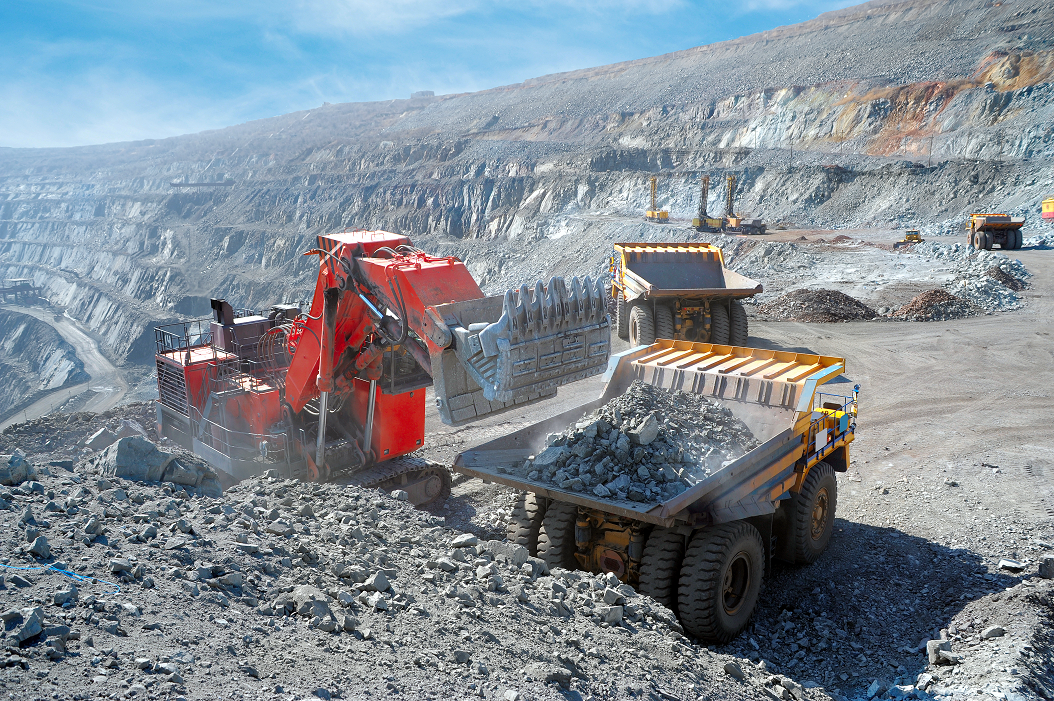
The U.S. Army’s conditional lease awards for domestic critical-mineral processing facilities are a good example. Processing facilities do not arrive as isolated buildings. They need sitework, roads, foundations, utilities, power distribution, tanks, conveyors, pumps, cranes, forklifts, loaders, maintenance access, and long-term service support.
That creates opportunity beyond the mine.
Civil contractors, industrial contractors, crane suppliers, rental fleets, material-handling companies, pump suppliers, power providers, truckers, dealers, and parts/service providers all become part of the system.
The initial construction may be the first wave. The longer opportunity is maintenance, expansion, plant support, material handling, road upkeep, replacement parts, and uptime.
This is why critical minerals are becoming a heavy equipment demand signal, not just a mining story. Mining equipment demand should not be read only through commodity prices. It should also be read through processing capacity, infrastructure buildout, and support intensity.
Charging Depot Construction Is a Heavy Equipment Demand Signal
Fleet electrification has the same issue.
The discussion often centers on the vehicle or machine. But commercial electrification only works when the site works.
Terawatt Infrastructure’s secured debt financing for fleet-focused charging infrastructure points to a larger market reality: charging depots are construction projects.
They require land, grading, paving, drainage, trenching, conduit, transformers, switchgear, utility coordination, lighting, security, traffic flow, maintenance access, and backup planning.
That creates demand for civil contractors, electrical contractors, utility contractors, compact equipment, trenchers, loaders, telehandlers, light towers, rental power, service trucks, and site-support equipment.
Charging depot construction is another heavy equipment demand signal hiding behind electrification.
The same question applies to electric construction equipment and electric mining trucks: the machine is only part of the adoption curve. Power, charging, service response, technician training, parts support, and utilization planning decide whether the equipment fits the work.
That is why electric mining trucks and autonomous fleet systems should be judged by the full operating model, not only by the machine spec.
Quarry Equipment Demand Is Support-System Demand
In quarrying and recycling, the bottleneck is rarely theoretical.
One belt, screen, pump, loader, conveyor, crusher, magnet, grapple, generator, or service delay can idle the system. Production depends on the flow, not the spec sheet of one machine.
That is why events like Hillhead matter beyond product launches. Quarrying, construction, and recycling are production-system markets. Loaders, excavators, articulated trucks, crushers, screens, wash plants, conveyors, pumps, dust control, attachments, wear parts, and field service all compete around uptime.
A loader feeding a crusher matters. So does the screen. So does the belt. So does the pump. So does the mechanic.
The most expensive machine is not always the most important failure point.
Quarry equipment demand is also support-system demand. For contractors, dealers, rental companies, and lenders, the lesson is the same: evaluate the system, not only the asset.
Rail and Freight Work Carry the Same Support Signal
Rail and freight infrastructure create another version of the same demand pattern.
Programs like the Federal Railroad Administration’s CRISI program are not heavy equipment stories on the surface. But once work moves from funding to execution, it becomes grading, drainage, bridge work, access roads, ballast, crossings, material handling, compact equipment, cranes, trucks, attachments, and field support.
The same applies to ports, intermodal yards, truck parking, industrial rail spurs, logistics hubs, and freight corridors.
The headline may be infrastructure funding. The equipment signal is the support work required to build and maintain the network.
Buying Versus Renting Should Be Judged by the Operation
Buying versus renting should not be decided only by payment, rental rate, or one job.
Contractors should think more like dealers think about absorption rate.
A dealer does not view a machine only as a one-time sale. The dealer thinks about parts, service, maintenance, future trades, used resale, machine population, and keeping that asset working in its territory for years.
Contractors can apply similar logic.
The question is not only, “Can this machine make money on this job?” The better question is, “Does owning this machine strengthen the whole operation?”
If ownership helps the contractor keep more work in-house, control schedule, reduce subcontractor dependency, build a crew, support future jobs, and capture more margin, buying may make sense.
If the machine will sit after the job, require support the contractor does not have, or create downtime risk the company cannot absorb, renting or subcontracting may be smarter.
Ownership is not automatically better. Rental is not automatically safer. Subcontracting is not automatically wasteful.
The answer depends on pipeline, utilization, crews, support capacity, maintenance discipline, capital position, and the contractor’s ability to keep the machine earning after the first job.
For more on that decision, see our guide to buying vs. renting construction equipment and our analysis of excavator rental costs.
Dealer Support Comes Before Price
Low acquisition cost loses its appeal quickly when the dealer cannot keep the machine working.
Price matters, but it should not be the first filter on infrastructure-heavy work. Parts availability, field service response, machine population, rental backup, warranty support, technician knowledge, and application experience should narrow the field before price decides the winner.
A low-price machine is not always the cheapest machine to own. Sometimes it is priced low because the support system behind it is weaker.
That may not matter in every application. It matters when uptime controls the job.
The contractor that limits downtime protects schedule, keeps crews productive, reduces disruption, and gets to the next job faster. That benefits the contractor, dealer, rental company, lender, subcontractor, and project owner.
The right process is simple: level the playing field first by support capability, machine suitability, parts availability, and service coverage. Once the contractor is down to machines that can actually support the work, then price becomes a fair comparison.
That is why dealer support should be treated as part of the equipment decision, not an afterthought.
FAQ: Heavy Equipment Demand and Support Infrastructure
What is driving heavy equipment demand now?
Heavy equipment demand is being shaped by infrastructure work, critical-mineral processing, quarry and recycling production, fleet electrification, rail and freight projects, and contractors bringing more work in-house instead of subcontracting it.
Why does support infrastructure matter for contractors?
Support infrastructure matters because production depends on more than the primary machine. Fuel, service trucks, operators, attachments, pumps, trucks, parts, dealer support, and downtime control can decide whether a job stays profitable.
How does downtime affect equipment ownership?
Downtime affects equipment ownership by reducing production, delaying crews, and compressing the machine’s lifecycle. A machine working 20 to 24 hours a day can reach major repair intervals much sooner than expected.
Should contractors buy or rent support equipment?
Contractors should buy support equipment when it strengthens the whole operation, improves utilization, reduces subcontractor dependency, and supports future work. Renting or subcontracting may be smarter when the equipment will sit after the job or requires support the contractor cannot provide.
Why does dealer support matter in heavy equipment demand?
Dealer support matters because parts availability, field service, machine population, rental backup, and technician knowledge can be more important than the lowest purchase price when uptime controls the job.
The Bottom Line
The next heavy equipment demand wave may not be defined by one machine category.
It may be defined by contractors, miners, quarries, industrial operators, and fleet owners building the support systems that let machines work.
Critical minerals need processing capacity. Electric fleets need charging depots. Quarries need production systems. Rail and freight work need civil support. Infrastructure jobs need fuel, service, operators, attachments, trucks, pumps, generators, parts, and dealer response. Older fleets need maintenance, rebuilds, rental backup, and uptime planning.
For contractors, the decision often starts when subcontractor margins become too visible. Bringing more work in-house can be the right move, but it shifts the support burden onto the contractor.
That is the real test.
The machine may be the visible asset. The support system determines whether the job makes money.
The next heavy equipment demand wave may be defined less by the machine itself and more by what keeps it working.
Do not only watch the machine.
Watch what keeps it working.