Heavy Equipment Market Trends: Mining, Electric Haulers, and Aftermarket Growth
Today’s heavy equipment market trends point to a market shaped by mining investment, electric haulers, AI and autonomy, aftermarket growth, and fleet ownership strategy.
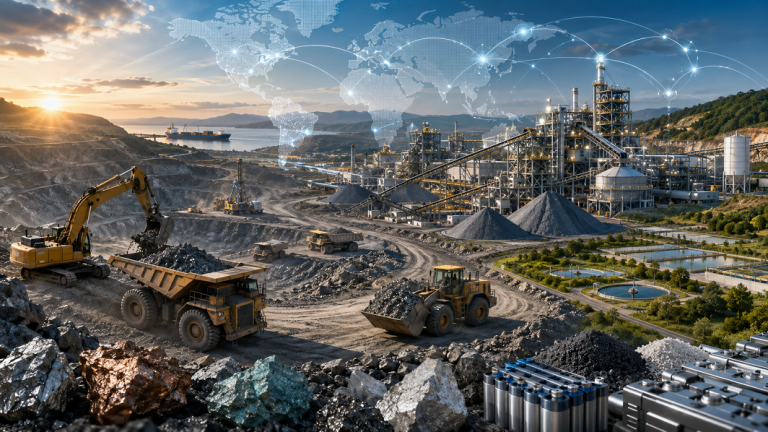
Mining projects continue to support long-term demand for large equipment and rebuild services. Volvo CE’s electric articulated haulers show that heavy-equipment electrification is moving beyond concept-stage discussion. At the same time, aging fleets, high replacement costs, and uncertain new-equipment commitments are making aftermarket support, repair planning, and component rebuilds more important across the ownership cycle.
Mining Investment Signals Remain Strong
Two major mining developments stood out in the May 20 report.
Freeport Indonesia said recovery at the Grasberg copper and gold operation is moving slower than expected because of moisture-related issues, with near-full run-rate recovery now expected in 2027. The company also referenced long-term investment plans exceeding $20 billion after 2041.
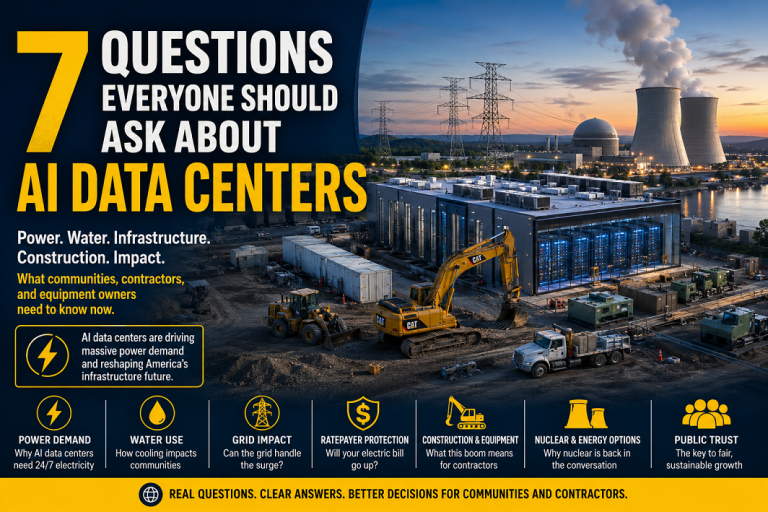
That matters because copper remains tied to some of the biggest long-term demand stories in the world: electrification, grid expansion, AI infrastructure, data centers, power generation, and industrial growth.
Even when individual mines face operating challenges, the investment pipeline still points toward long-term demand for haul trucks, drills, loaders, support fleets, engines, hydraulics, rebuild services, and field maintenance.
Canada’s backing of Agnico Eagle’s Hope Bay redevelopment in Nunavut adds another signal. Arctic mining is not just a mining story. It is an equipment reliability story. Remote projects place a premium on uptime, logistics, cold-weather serviceability, field repair capability, and parts planning.
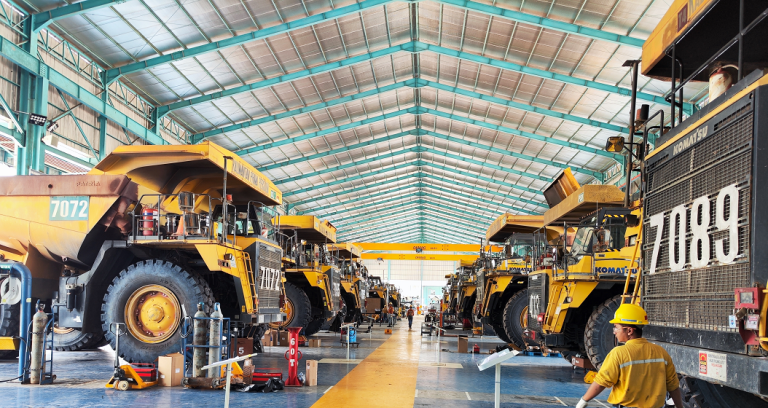
For HEPLANET readers, the takeaway is that mining equipment demand should not be viewed only through new-machine sales. Large mining projects create long tails of service, maintenance, rebuilds, undercarriage, hydraulics, engines, support equipment, and component replacement.
Electric Heavy Hauling Moves Closer to Reality
Volvo CE’s move to serial production of the A30 Electric and A40 Electric articulated haulers is one of the more important equipment developments in the report.
This is not just another electric concept machine.
Electric articulated haulers entering production suggests that electrification is moving into heavier applications where quarry, aggregate, and mining operations may become early adopters.
The practical questions are not only about emissions.
The real questions are operational:
Can the charging infrastructure support the duty cycle?
How does electric hauling affect uptime?
What changes in maintenance planning?
How will battery life affect ownership cost?
How will fleets manage mixed diesel and electric equipment?
How will resale markets value early electric heavy equipment?
HEPLANET should avoid hype around electrification. The better angle is practical fleet reality.
Electric machines may reduce certain maintenance requirements, but they also introduce new planning demands around charging, power supply, site layout, technician training, battery management, and utilization.
The machine is only one part of the transition. The operating environment has to be ready for it.
AI and Autonomy Keep Moving From Mining Into Construction
The report also points to a larger technology trend: systems that started gaining traction in mining are moving closer to broader construction use.
AI-assisted operators, voice-assisted diagnostics, autonomous material handling, machine-learning fleet optimization, telematics, and remote diagnostics all point toward a market where equipment is becoming more connected and data-driven.
The important shift is that manufacturers are no longer competing only on iron, horsepower, hydraulics, and machine size.
They are increasingly competing on technology ecosystems.
That affects productivity, maintenance planning, operator efficiency, fuel management, safety, machine history, and eventually resale value.
For contractors, the question will not simply be whether a machine has technology. The question will be whether that technology actually improves production, reduces downtime, helps manage labor shortages, and gives the owner better control over fleet cost.
Energy and Infrastructure Projects Stay on the Watchlist
The report flagged Canadian energy policy developments that may support future Pacific export pipeline discussions, although the situation remains politically and financially uncertain.
This should not be framed as a pipeline boom yet.
But energy infrastructure belongs on the watchlist because major pipeline and export projects can drive demand for dozers, pipelayers, excavators, articulated trucks, aggregate production, support fleets, fuel/lube trucks, and field-service operations.
The best HEPLANET framing is cautious:
If projects advance, equipment demand follows.
If permitting, politics, or financing slow the projects, contractors and suppliers need to watch before overcommitting.
Infrastructure demand is real, but timing matters.
Tunneling and Mega-Projects Continue to Drive Specialized Equipment Demand
India’s deployment of large tunnel boring machines for the Mumbai-Ahmedabad bullet train project points to another global equipment trend: specialized infrastructure projects continue to require high-capital equipment ecosystems.
Large tunneling and rail projects create demand beyond the tunnel boring machines themselves.
They support concrete, aggregate, cranes, loaders, excavators, haulage, support equipment, power systems, pumps, ventilation, service fleets, and contractor logistics.
For HEPLANET, this is part of a larger theme: infrastructure demand is becoming more specialized.
The contractors who win and execute these projects need more than machines. They need planning, support infrastructure, service capability, parts access, safety systems, and execution discipline.
Heavy Equipment Market Trends Are Strengthening Repair and Rebuild Economics
One of the strongest ownership signals in the report is the continued importance of repair-and-rebuild economics.
The report points to aging fleets, elevated replacement costs, electrification uncertainty, and cautious new-equipment commitments as reasons the aftermarket is becoming more strategically important.
That fits the broader HEPLANET Phase 1 theme.
When new machines are expensive, financing is tighter, delivery timelines are uncertain, or owners are cautious, more machines stay in service longer. That increases demand for maintenance, replacement parts, undercarriage, hydraulics, cooling systems, electrical parts, engines, pumps, motors, cylinders, seal kits, pins, bushings, and rebuild planning.
For owners, the decision is not always simple.
Repair the machine now?
Rebuild the component?
Buy reman?
Use aftermarket parts?
Wait for OEM parts?
Replace the machine?
Rent temporarily?
Keep the old machine working until market conditions improve?
Those are fleet economics decisions, not just maintenance decisions.
The aftermarket business is becoming more important because uptime is becoming more expensive to lose.
That makes dealer support and parts availability central to the real cost of ownership, especially as machines stay in service longer.
Chinese OEM Pressure Should Be Viewed Through Ownership Risk
Chinese OEMs such as XCMG, SANY, LiuGong, and Zoomlion continue expanding internationally, according to the report.
The easy article would be a brand-war piece.
HEPLANET should avoid that.
The stronger angle is ownership reality.
Lower acquisition cost matters, but so do dealer support, parts availability, financing, service coverage, resale confidence, warranty execution, technician training, and machine population in the region.
For contractors, the question is not whether a lower purchase price is attractive. It often is.
The better question is whether the machine can be supported throughout its ownership life.
A lower-cost machine may be a good fit in one market and a risky fit in another. Dealer strength, parts stocking, field service, aftermarket support, machine population, and resale demand all matter.
That is where HEPLANET can add value: not by attacking brands, but by helping buyers understand lifecycle risk.
Mega-Project Execution Risk Is Becoming an Industry Theme
Australia’s Snowy Hydro 2.0 project continues to face safety incidents, labor tension, delays, and budget pressure, according to the report.
That matters beyond one project.
Large infrastructure projects around the world are dealing with skilled labor shortages, safety requirements, productivity challenges, equipment coordination, rising costs, and complex execution risk.
For equipment owners and contractors, project risk affects machine utilization, rental demand, maintenance planning, workforce pressure, and cash flow.
A machine can be available. The project can be funded. The demand can be real.
But execution still determines whether equipment is productive or sitting.
That makes project execution risk a worthwhile HEPLANET theme for future coverage.