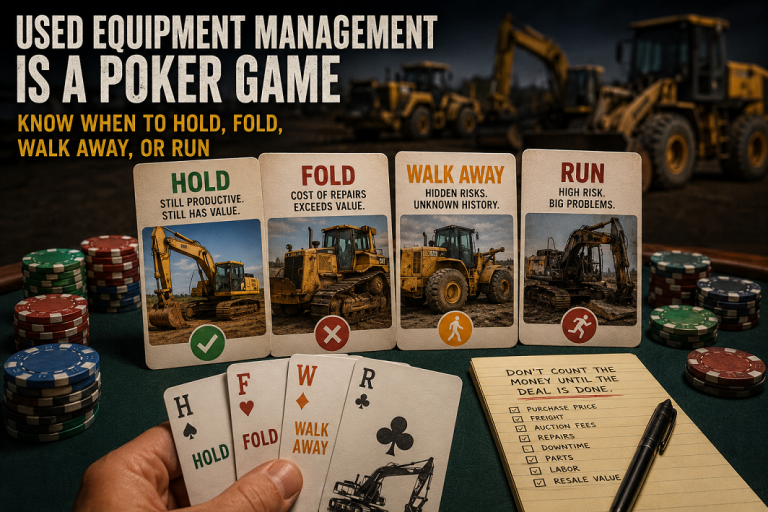
Used Heavy Equipment Buying Guide: Hours, Lifecycle, Parts Availability, and Ownership Cost
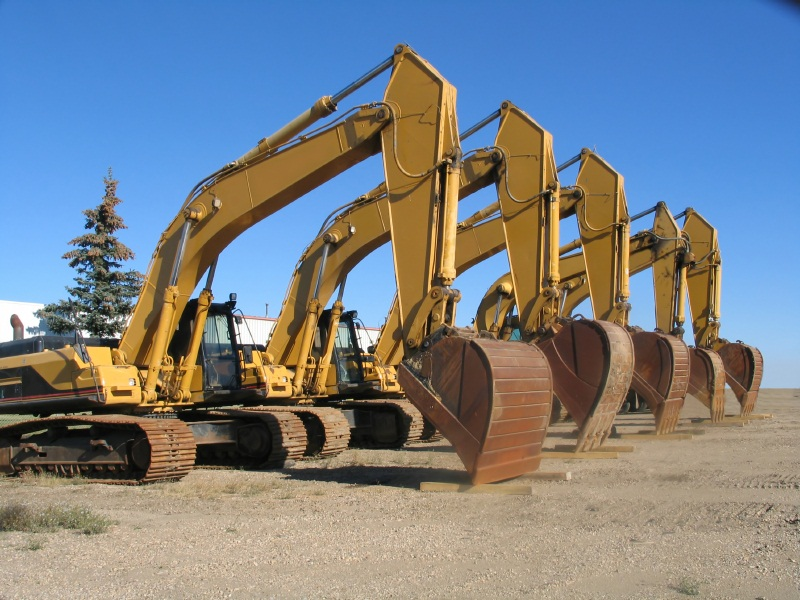
Buying used heavy equipment can be one of the smartest decisions a contractor, fleet owner, rental company, or mining operation makes.
It can also become one of the most expensive mistakes.
Used equipment often gives buyers access to productive machines without the full cost of buying new. A well-maintained excavator, wheel loader, bulldozer, motor grader, articulated dump truck, or compact machine can deliver years of useful work when it is bought correctly, inspected properly, and supported with available parts.
But used machines carry risk. They already have hours. They already have wear. Their maintenance history may be incomplete. Their major components may be closer to repair. And if the buyer does not understand the machine’s lifecycle, dealer support, parts availability, and expected ownership cost, a low purchase price can quickly turn into high repair bills and downtime.
A used machine should not be judged only by price, paint, year, or hour meter.
The better question is:
Can this machine keep working profitably after I buy it?
That question is where real used equipment intelligence begins.
Purchase Price Is Not the Same as Ownership Cost
The purchase price is only the beginning of a used equipment decision.
A used machine may look attractive because it is cheaper than a new machine, cheaper than a competing model, or available immediately. But the true cost of ownership includes much more than the amount paid at purchase.
Used heavy equipment ownership cost includes:
- Purchase price
- Financing cost
- Transportation
- Immediate repairs
- Preventive maintenance
- Wear parts
- Fuel consumption
- Fluid and filter service
- Undercarriage or tire condition
- Hydraulic repairs
- Engine repairs
- Downtime
- Rental replacement costs
- Resale value
- Parts availability
- Dealer and aftermarket support
A machine that is cheaper to buy can become more expensive to own if it needs immediate repairs, has poor parts support, or creates repeated downtime.
That does not mean buyers should avoid used equipment. It means they should evaluate used machines with a full ownership mindset.
The right question is not only:
“What can I buy this machine for?”
The better question is:
“What will this machine cost me over the next several thousand hours?”
Machine Hours Matter, But They Do Not Tell the Whole Story
The hour meter is important, but it is not enough.
Two machines with the same hours can have very different values. One may have been serviced on schedule, operated carefully, repaired properly, and used in a moderate application. Another may have been abused, poorly maintained, worked in harsh material, overheated, run with poor lubrication, or repaired only when failure occurred.
Machine hours should be viewed together with:
- Application
- Maintenance history
- Operator care
- Environment
- Service records
- Repair history
- Component condition
- Dealer support
- Parts availability
- Inspection results
A 6,000-hour machine with strong maintenance history may be a better buy than a 3,500-hour machine with poor records and signs of abuse.
The hour meter tells you how long the machine has worked. It does not tell you how well it was maintained or what repairs are coming next.
Trust Machine Condition More Than the Hour Meter
Hour meters are useful, but buyers should not trust them blindly.
This is especially important when buying used heavy equipment through auctions, brokers, or sellers with limited machine history. Hour meters can be wrong for several reasons. A meter may have failed and been replaced. It may have stopped working for a period of time. It may have been replaced with another used meter. In some cases, the displayed hours may not reflect the machine’s true operating life.
That is why buyers should compare the hour meter against the physical condition of the machine.
Look for signs that match, or do not match, the stated hours:
- Pedal wear
- Seat wear
- Control lever wear
- Cab condition
- Pin and bushing wear
- Undercarriage wear
- Hydraulic leaks
- Engine blow-by
- Paint condition around service areas
- Weld repairs
- Bucket and attachment wear
- Track frame condition
- Loader arm or boom wear
- Service records
- Dealer history
A machine showing low hours but heavy wear should raise questions. A machine showing higher hours but clean maintenance records, tight components, and honest condition may still be a better buy.
The hour meter is a clue. The machine’s condition is the evidence.
Understand the Machine Lifecycle Before Buying
Every machine moves through a lifecycle.
In the early years, repair exposure is usually lower. The machine is newer, components have less wear, and warranty coverage may still reduce out-of-pocket repair costs. As the machine accumulates hours, repair needs usually begin to rise.
For many heavy equipment machines, the 4,000 to 8,000 hour range becomes especially important.
Around 4,000 hours, repairs may begin to increase. These may include wear-related items such as hoses, belts, seals, filters, pins, bushings, linkages, cooling components, electrical issues, and hydraulic leaks. These repairs may still be moderate, but they are often the start of a more expensive ownership stage.
Around 6,000 to 8,000 hours, depending on the machine type, application, maintenance history, and previous repairs, larger component-related issues may become more likely. These can include hydraulic pumps, cylinders, final drives, transmissions, engines, drivetrain components, undercarriage systems, cooling systems, and structural wear.
These are not exact rules. A machine in light-duty work with excellent maintenance may perform differently than a machine used in rock, demolition, mining, land clearing, or heavy earthmoving. Operator habits matter. Service intervals matter. Previous repairs matter.
But the lifecycle concept is important.
A used machine with 4,000 to 8,000 hours may not simply be “used.” It may be entering the period where repair frequency and parts demand begin to climb.
That does not automatically make it a bad purchase.
It means the buyer needs to price the machine correctly, inspect it carefully, understand the repair risk, and confirm that parts are available.
The 4,000 to 8,000 Hour Question
When evaluating a used machine in the 4,000 to 8,000 hour range, buyers should slow down and ask better questions.
This is often the period where the machine may still look attractive, still have useful life, and still be priced below newer alternatives. But it may also be entering a more repair-sensitive stage.
Before buying, ask:
- What repairs have already been done?
- What major components are still original?
- Has the undercarriage been replaced or measured?
- Have hydraulic pumps or cylinders been repaired?
- Has the engine had any major work?
- Are there signs of overheating?
- Are pins and bushings loose?
- Are hoses and seals leaking?
- Are service records available?
- Are parts available locally?
- Are aftermarket parts available?
- Does the local dealer support this model well?
If a machine has already had major repairs done correctly, it may be entering a more stable period. If major repairs are still ahead, the buyer needs to account for that in the purchase price and ownership plan.
This is where used equipment buying becomes less about the hour meter and more about lifecycle position.
A Machine Can Be Cheap for a Reason
Some used machines are priced low because the seller wants to move them quickly. Others are priced low because the market does not value that model strongly. But sometimes a machine is cheap because the next owner is likely to inherit the repair problem.
That risk is especially important when the machine has:
- Limited dealer support
- Limited aftermarket parts availability
- Poor maintenance records
- Visible leaks
- Excessive undercarriage wear
- Loose pins and bushings
- Engine smoke or blow-by
- Transmission or final drive issues
- Overheating history
- Electrical problems
- Structural cracks
- Uncommon model configuration
- Low resale demand
A low purchase price can disappear quickly if the machine needs major repairs soon after purchase.
A buyer should never confuse a low price with a good value.
Good value means the machine’s price, condition, supportability, and expected repair cost make sense together.
Dealer-Certified Used Equipment Can Reduce Risk
Not all used equipment is sold the same way.
There is a meaningful difference between buying a random used machine and buying a dealer-certified or dealer-remarketed machine. A dealer-certified used machine has usually gone through a more formal inspection and reconditioning process before being offered for sale.
A dealer is not simply looking at the machine from the outside. A serious dealer inspection may include pressure testing, diagnostic readings, hydraulic checks, engine evaluation, component inspection, fluid review, undercarriage measurement, service history review, and operational testing. Depending on the dealer, machine, and program, the process may also include repairs, reconditioning, warranty options, or eligibility for extended coverage such as powertrain protection.
This matters because a dealer puts its reputation behind the machines it sells. No inspection process is perfect, and certified used equipment does not eliminate all risk. But it can reduce uncertainty compared with buying a machine with limited records, unknown history, or no meaningful support after the sale.
Dealer-certified used equipment may cost more than a similar machine sold through a less formal channel, but the higher price may come with value:
- Better inspection process
- More accurate condition reporting
- Dealer-backed support
- Reconditioning before sale
- Warranty or extended warranty options
- Powertrain coverage in some cases
- Better parts and service access
- More buyer confidence
For some buyers, especially those who cannot afford a surprise major repair, certified used equipment may be worth the premium.
The key is to understand what “certified” actually means. Buyers should ask what was inspected, what was repaired, what warranty applies, what is excluded, and whether major components were tested or only visually inspected.
A certified label is useful only if the process behind it is real.
Parts Availability Should Be Checked Before the Purchase
Parts availability is one of the most important used equipment buying factors.
A used machine is more likely to need repairs than a new machine. That means the buyer should know whether the machine can be supported before committing money.
Before buying used heavy equipment, check availability for:
- Filters
- Belts
- Hoses
- Seal kits
- Pins and bushings
- Bearings
- Gaskets
- Undercarriage parts
- Hydraulic pumps
- Hydraulic cylinders
- Final drive parts
- Engine components
- Transmission parts
- Cooling parts
- Electrical components
- Ground engaging tools
Parts support is not just a maintenance issue. It affects downtime, repair cost, resale value, and whether the machine can stay productive.
A machine with strong parts availability gives the owner options. A machine with weak parts support can trap the owner into longer lead times, higher prices, and fewer repair choices.
Dealer Support Can Change the Value of a Used Machine
Local dealer strength matters when buying used equipment.
Heavy equipment dealers often cover large territories. Their parts inventory, service capability, technician knowledge, and response time can have a direct impact on ownership cost.
A strong dealer can help with:
- Parts lookup
- Emergency parts orders
- Field service
- Diagnostic support
- Warranty history, if applicable
- Technical advice
- Component exchange programs
- Reman options
- Service records
- Resale confidence
A weak dealer network can make even a good machine harder to own.
A buyer should not only ask whether the manufacturer is strong globally. They should ask whether the machine is well supported locally.
The practical question is:
If this machine goes down tomorrow, who can help me get it running again?
Aftermarket Support Gives Used Equipment Buyers More Options
Aftermarket parts can be especially important for used machines.
As machines age, owners often need more flexibility. They may not always want or need an OEM-only repair path. They may need quicker availability, better pricing, more supplier options, or parts for older models that are no longer strongly supported through normal dealer channels.
Strong aftermarket support can help with:
- Lower repair cost in some cases
- Faster sourcing in some situations
- Support for older machines
- Wear parts availability
- Seal kits
- Pins and bushings
- Hydraulic components
- Engine components
- Undercarriage parts
- Rebuild options
- Practical repair flexibility
This does not mean aftermarket parts are always better than OEM parts. OEM parts may still be the best choice for certain critical repairs, warranty-related work, emissions systems, software-linked components, and highly specialized applications.
The advantage is having options.
A used machine with both dealer support and aftermarket support is often easier to own than a machine that depends on one narrow parts channel.
Inspect the Undercarriage Carefully
For tracked machines, undercarriage condition is one of the most important cost factors.
This applies especially to:
- Excavators
- Bulldozers
- Track loaders
- Compact track loaders
- Crawler carriers
- Some mining and quarry machines
Undercarriage repairs can be expensive, and poor undercarriage condition can affect performance, productivity, and safety.
Inspect:
- Track chains
- Track shoes or pads
- Rollers
- Idlers
- Sprockets
- Guards
- Adjusters
- Pins and bushings
- Track tension
- Uneven wear
- Cracks or missing hardware
A machine may look good from a distance but carry a major undercarriage cost underneath.
Used equipment buyers should either measure undercarriage condition properly or have it inspected by someone who knows how to evaluate wear.
Undercarriage evaluation can also be confusing because people may describe wear differently. Dealers and technicians often speak in terms of percentage worn, while buyers may think in terms of percentage remaining. Those are not the same thing in practical buying conversations. A machine described as having undercarriage that is “45% worn” may sound acceptable, but on some dozers that can also mean the buyer is approaching the point where pin and bushing work may soon be needed.
Excavators and dozers also wear undercarriage differently. Dozers often create more external bushing wear through travel and pushing, while excavators may show more internal wear because they travel less but carry heavy load shifts while digging and swinging. Buyers should not rely on a simple percentage without understanding what was measured, what components were measured, and what repair cost may be coming next.
Inspect Hydraulics Like Your Money Depends on It
Hydraulic systems are central to heavy equipment productivity.
Excavators, loaders, dozers, graders, compact equipment, and mining machines all depend on hydraulic performance. A hydraulic problem can reduce productivity, create leaks, overheat the system, contaminate components, or stop the machine completely.
Check for:
- Leaking cylinders
- Scored cylinder rods
- Worn seals
- Noisy pumps
- Slow hydraulic response
- Weak digging or lifting power
- Overheating
- Contaminated oil
- Damaged hoses
- Poor repairs
- Excessive drift
- Jerky operation
Hydraulic repairs can range from simple hose replacement to major pump, cylinder, valve, or motor repairs.
Before buying, the buyer should understand whether hydraulic issues are minor service items or signs of larger system wear.
Test the Machine Under Load Before You Buy
A used machine should not only be started, idled, and driven around lightly. It should be tested under realistic working conditions whenever possible.
This does not mean abusing the machine or exceeding its rated limits. It means operating it hard enough to reveal problems that may not show up during a casual inspection.
A machine may look fine at idle. Hydraulic cylinders may appear slightly wet but not actively leaking. Pumps may still function, even if they are weak. A transmission may move the machine, but not perform well under load. Cooling issues may not appear until the machine is worked.
A proper test should help reveal:
- Weak hydraulic pumps
- Slow cycle times
- Cylinder drift
- Leaking seals
- Overheating
- Transmission slipping
- Steering issues
- Brake problems
- Excessive smoke
- Unusual noises
- Lack of power
- Final drive problems
- Electrical faults under operation
For an excavator, that may mean digging, lifting, swinging, tracking, and checking cycle speed. For a wheel loader, it may mean loading into a pile, lifting, steering, braking, and shifting under load. For a dozer, it may mean pushing material, checking blade response, tracking, steering, and watching engine temperature. For an articulated dump truck, it may mean loaded operation if possible, steering, braking, shifting, and checking suspension or drivetrain behavior.
The inspection period may be the buyer’s only real chance to object before money changes hands. That is especially true in auction or as-is purchases.
A machine should be evaluated while it is doing the kind of work it was built to do.
Pins, Bushings, and Linkage Wear Matter
Pins and bushings are easy to overlook, but they say a lot about machine condition.
Excessive looseness in an excavator boom, stick, bucket linkage, loader arms, blade linkage, or articulation joint can affect productivity and repair cost. If ignored, wear can spread into bores, structures, and related components.
Inspect for:
- Bucket looseness
- Boom and stick play
- Loader arm movement
- Blade linkage wear
- Articulation joint wear
- Grease condition
- Missing grease points
- Welded or improvised repairs
- Egg-shaped bores
- Cracks around pin areas
Pins and bushings are not always the most expensive parts by themselves, but neglected wear can become a larger structural repair.
Engine and Cooling System Condition Matter
Engine condition should be evaluated carefully before buying used heavy equipment.
Check for:
- Hard starting
- Excessive smoke
- Blow-by
- Oil leaks
- Coolant leaks
- Fuel leaks
- Overheating signs
- Contaminated fluids
- Poor maintenance records
- Unusual noises
- Low power
- Turbocharger issues
- Radiator and cooling package condition
Cooling system problems are especially important. Overheating can damage engines, transmissions, hydraulic systems, and other components.
A clean machine is not always a healthy machine. Buyers should inspect fluids, service history, and operating behavior, not just exterior appearance.
Look Beyond the Machine: Think About the Jobsite
Used equipment buying is not just about one machine. It is about how that machine fits into the work.
On many jobsites, machines depend on each other. A dozer may feed material to an excavator. An excavator may load articulated dump trucks. ADTs may haul to a processing area or stockpile. A loader may feed on-road trucks. A grader may maintain the haul road.
When one machine goes down, several other machines may lose productivity.
That means downtime can create costs beyond the repair itself:
- Idle operators
- Parked trucks
- Delayed crews
- Rental replacements
- Missed production targets
- Project delays
- Increased cost per yard or ton
- Lower equipment utilization
- Customer scheduling problems
A used machine that breaks often can disrupt more than its own production.
This is why supportability matters. If a machine has a critical role in the jobsite system, parts availability becomes even more important.
Match the Machine to the Application
A machine that is a good buy for one application may be a poor choice for another.
Before buying, consider:
- Material type
- Ground conditions
- Cycle times
- Haul distances
- Lift requirements
- Digging conditions
- Attachment needs
- Operator skill
- Climate
- Fuel consumption
- Transport requirements
- Job duration
- Required uptime
For example, a machine used occasionally for support work may not need the same cost structure as a primary production machine. But even a support machine can cause problems if its failure stops other equipment from working.
The right used machine is not just the machine that is available. It is the machine that fits the job, the fleet, the repair budget, and the support network.
Service Records Are Worth Real Money
Good service records increase confidence.
They can show whether the machine was maintained properly, repaired on time, and supported by a disciplined owner. Missing records do not always mean the machine is bad, but they do increase uncertainty.
Look for records showing:
- Oil and filter changes
- Hydraulic service
- Coolant service
- Transmission service
- Final drive service
- Undercarriage repairs
- Component rebuilds
- Engine work
- Cylinder reseals
- Pump repairs
- Dealer inspections
- Fluid analysis
- Warranty work
A machine with clear repair history may be easier to evaluate than one with unknown history.
The more unknowns, the more cautious the buyer should be.
Resale Value Depends on Supportability
Used equipment should be evaluated not only by what it costs today, but by what it may be worth later.
Machines with strong dealer support, common parts, aftermarket options, and broad market acceptance are usually easier to resell. Buyers feel more confident when they know a machine can be repaired and supported.
Machines with limited support may be harder to sell, even if they run well today.
Before buying, ask:
- Is this machine popular in my region?
- Do contractors recognize and trust the model?
- Are parts available?
- Are aftermarket options available?
- Is dealer support strong?
- Will another buyer want this machine later?
- Is the model known for expensive repairs?
- Is the machine entering a high-repair lifecycle stage?
Resale value is connected to supportability.
A machine that is hard to support can become hard to sell.
Used Equipment Buying Checklist
Before buying used heavy equipment, review the machine through four lenses:
1. Condition
Check:
- Hours
- Application history
- Service records
- Undercarriage or tire condition
- Hydraulics
- Engine
- Cooling system
- Transmission
- Final drives
- Pins and bushings
- Electrical systems
- Structural condition
- Attachments
2. Lifecycle
Ask:
- Is the machine below 4,000 hours?
- Is it entering the 4,000 to 8,000 hour repair-sensitive range?
- Are major repairs already completed?
- Are major repairs likely coming soon?
- Does the price reflect that risk?
- Is the machine worth rebuilding later?
3. Supportability
Confirm:
- Local dealer strength
- Parts availability
- Aftermarket options
- Emergency lead times
- Rebuild or reman options
- Technical support
- Commonality in the region
- Resale demand
4. Ownership economics
Calculate:
- Purchase price
- Expected repairs
- Downtime risk
- Maintenance cost
- Fuel use
- Rental replacement risk
- Production value
- Resale value
- Cost per hour
- Cost per ton, yard, or project unit if applicable
A used machine should only be considered a good deal when all four areas make sense together.
The HEPLANET Takeaway
Used heavy equipment can be a smart investment, but only when the buyer understands what they are really buying.
The hour meter matters. The price matters. The brand matters. But those are only part of the decision.
A strong used equipment decision also requires understanding:
- Machine lifecycle
- Repair risk
- Parts availability
- Local dealer support
- Aftermarket options
- Maintenance history
- Downtime exposure
- Jobsite impact
- Resale value
- Ownership cost
The best used machine is not always the cheapest machine. It is the machine that can keep working, be repaired quickly, fit the job, and make economic sense over the next several thousand hours.
Before buying, ask:
Where is this machine in its lifecycle?
What repairs are likely coming next?
Can I get the parts when I need them?
Is the local dealer strong?
Are aftermarket options available?
Will this machine still make sense after the first major repair?
Those questions can protect buyers from expensive surprises and help turn used equipment into a profitable asset instead of a costly problem.