Excavator Price Guide: 7 Reasons Most Prices Mislead Buyers
Most people searching for an excavator price guide want a simple answer.
They want to know what a mini excavator costs, what a 20-ton excavator should sell for, what used excavator prices are doing, or whether an auction price is a good deal.
The problem is that most excavator price guides look more useful than they really are.
A guide may show an average used excavator price, a rental rate, an auction trend, or a broad price range. Those numbers may be technically accurate inside the data set being used, but they often do not help a contractor, dealer, fleet manager, or auction buyer decide what a specific excavator is actually worth.
The reason is simple: “excavator” is not one market.
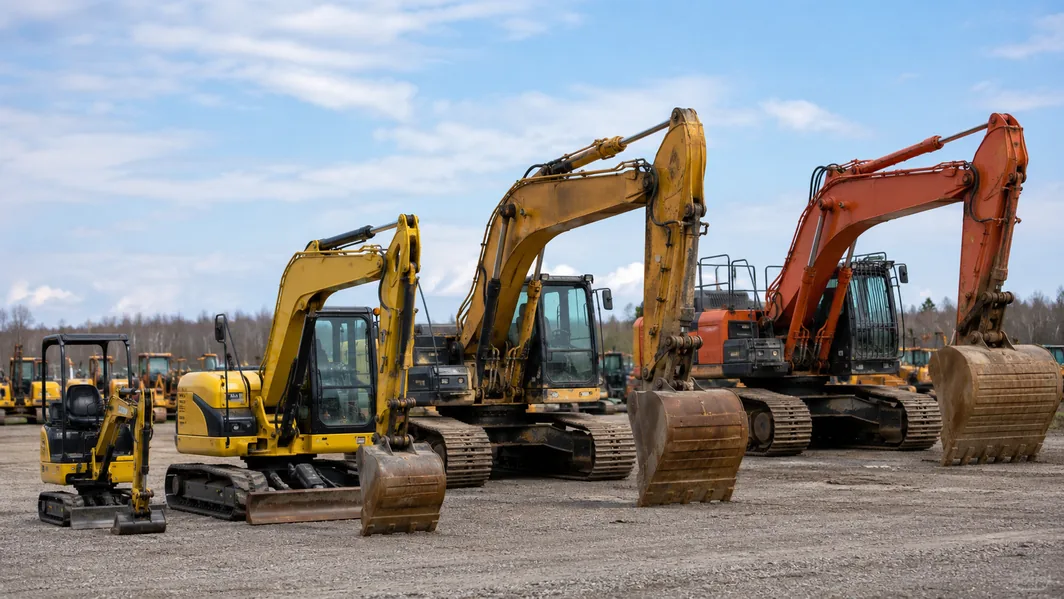
A compact excavator, 20-ton excavator, 30-ton excavator, long-reach excavator, demolition machine, mass excavation machine, and large production excavator should not be averaged together and treated as one useful pricing category.
Even within the same size class, two excavators with the same model year and similar hours can have very different values. Undercarriage condition, hydraulic performance, attachment setup, emissions system, region, dealer support, seller type, hour-meter credibility, auction timing, and transport cost can move the real number by tens of thousands of dollars.
That is why many excavator price guides are not wrong exactly.
They are too broad to be useful.
1. An Average Excavator Price Can Hide the Entire Story
Average price is one of the weakest ways to understand excavator value.
A published average may sound precise, but the number can hide the entire market underneath it. If a data set includes mini excavators, mid-size crawler excavators, older high-hour machines, late-model low-hour machines, and large production excavators, the average may not represent anything a buyer is actually considering.
An average can be mathematically correct and still practically meaningless.
If one machine sells for very little because it is rough, damaged, high-hour, missing components, or close to salvage condition, while another machine sells for a very high number because it is late-model, low-hour, clean, and in demand, the average may land somewhere in the middle.
But the buyer is not buying the average.
The buyer is buying one machine.
That machine may be worth far above or far below the published average depending on its actual condition, configuration, and market.
This is why experienced used equipment people do not stop at averages. They look for comparable machines: same size class, same model family, similar age, similar hours, similar region, similar condition, and similar sale channel.
Even then, the comparison is imperfect.
Averages make the market look clean. Actual excavator buying is messy.
2. Excavator Size Class Matters More Than the Headline
The first question in any excavator price discussion should be:
What size excavator are we talking about?
A mini excavator does not compete with a 20-ton excavator. A 20-ton excavator does not compete with a 50-ton excavator. A long-reach machine does not compete directly with a standard digging machine. A demolition machine with guarding, special hydraulics, and high-reach equipment is in a different market from a general contractor’s earthmoving excavator.
Broad price guides often fail because they treat the category as if all excavators belong in one pool.
They do not.
The 20- to 30-ton class is usually easier to compare because there is more market activity. These machines are common in site work, utilities, road work, demolition, land clearing, and general construction. There are more buyers, more sellers, more rental fleets, more auction results, and more dealer inventory.
But once you move into very large excavators, the market becomes thinner. A large production excavator may have only a handful of real buyers. The sale price becomes heavily dependent on who showed up, what work those buyers have, whether the machine is available anywhere else, and whether buyers can finance or fund the purchase.
That last point matters.
Large excavators are often not sitting in dealer inventory waiting for a buyer. They may be brought in for a specific job, ordered months in advance, or tied to a particular mining, quarry, demolition, or production application. If one shows up at auction, the result may say as much about availability and financing as it does about the machine’s value.
Auction sales are usually cash or near-cash transactions. A contractor who might be able to finance a large excavator through a dealer may not be able to act the same way at auction. That can limit the buyer pool, even when there is real interest in the machine.
So when a large excavator sells low, it may not mean the machine had no value. It may mean the right buyer was not there, financing was not available, freight was too difficult, or the timing did not match the work.
The same applies in the other direction. If two serious buyers need that machine immediately and cannot find another one, the price can move sharply higher.
That is why size class is not a small detail.
It is the starting point.
3. Auction Prices Are Not Retail Prices
Auction results are real transactions, but they are not automatically retail value.
To understand excavator auction prices, you have to understand what an auction is designed to do.
An equipment auction is usually a liquidation channel. A rental company, contractor, dealer, or fleet owner may send machines to auction because they want to turn equipment into cash and move on. A rental company may package 50, 60, or 70 machines together and send them to auction even though it may be leaving retail profit on the table.
Why?
Because retail selling takes time. Machines have to be inspected, repaired, advertised, shown, negotiated, financed, and supported. A rental company’s core business is renting equipment, not retailing every used machine one at a time over several months. Auction lets the company move a large group of machines, accept the commission and transportation costs, take the cash, and focus on its main business.
That is why auction value should generally be viewed as wholesale-oriented, not retail-oriented.
Most auction attendees are not end users willing to pay full retail. Many are dealers, used equipment managers, brokers, exporters, and used-equipment companies looking to buy the machine, improve it, and resell it. That buyer cannot afford to pay the same number a contractor might pay from a dealer.
A dealer used-equipment manager may look at an auction machine and work backward from retail. If the machine could retail for a certain price, the dealer has to subtract repairs, freight, auction fees, risk, and expected margin. The dealer may want to buy 15% to 20% below expected retail after accounting for visible repairs and still leave a cushion for problems that cannot be fully diagnosed at auction.
That cushion matters.
At auction, there are always things you cannot know. A machine may run well cold but show problems after it warms up. It may not be tested under load. Hydraulic weakness, overheating, electrical issues, swing bearing wear, final drive noise, or emissions faults may not show clearly during a quick inspection. Even experienced buyers miss things.
A dealer also has a different business reason for buying used equipment. The goal is not always just to make one profit on one machine. A dealer may buy a decent used excavator, put it through the shop, keep technicians busy, sell it into its territory, and create future parts and service opportunities with that customer. A good used machine can become the start of a long-term relationship.
That is very different from the way many people think about used sales.
In heavy equipment, relationships matter. Contractors do not buy excavators the way consumers buy cars. A contractor who buys one machine today may grow into a customer who buys parts, service, rentals, attachments, and future machines for years. If a dealer burns that customer with a bad used machine, the damage can last far longer than one sale.
That is why auction pricing is not retail pricing.
A contractor may sometimes bid a machine up to retail or above retail because he needs that exact machine now. But that is usually an outlier, not the standard auction buyer’s calculation.
For more on inspection limits and auction risk, see HEPLANET’s guide to buying used heavy equipment at auction.
4. Auction Volume Can Be Misread
Auction reports often mention volume changes. More machines sold can sound like stronger demand, but volume by itself does not explain the market.
If auction excavator volume rises, the reason matters.
It could mean demand is strong and more sellers are taking advantage of the market. It could mean rental companies are rotating fleet. It could mean dealers are clearing inventory. It could mean one or two large packages hit the market and distorted the comparison. It could mean the previous year was unusually low. It could mean sellers are nervous and want cash.
It could also mean one auction company won the package instead of another.
That matters because large equipment packages are competitive. A rental company, dealer, or fleet owner with 50, 60, or 70 machines to sell may negotiate with more than one auction company. If one auction company reports a large increase in excavator volume, that may be a strong result for that auction company, but it does not automatically mean the total market had the same increase. Some of that volume may simply have moved from one auction company to another.
In that sense, volume can be both a market signal and a company-performance signal.
An auction company highlighting higher volume may be showing that it attracted more consignments, won more seller packages, increased participation, or built a larger sale. That matters to the auction company, its sellers, and possibly its shareholders. But it is not automatically a clean reading of excavator demand across the whole industry.
For example, Ritchie Bros. publishes market trend reports that can be useful for seeing auction activity, median pricing, and volume by category. But even with a strong auction data source, the reader still has to ask what is being counted, what size class is included, whether the machines are comparable, and whether the volume reflects total market growth or a shift in consignments from one sale channel to another.
To know whether volume says something bigger, you would need to see whether multiple auction companies, regions, and sale channels are showing the same pattern.
If one auction company has more excavators this quarter, it may mean the excavator market is more active. It may also mean that company won the business.
The number alone does not tell you which one is true.
Auction companies also have their own reasons to talk about volume. Higher volume can mean more assets sold, more commissions, more buyer activity, and more services around the sale. Many auction companies also generate revenue from inspections, transport coordination, paint, cleanup, body work, repair, and sale preparation.
So when an auction company highlights participation, volume, or gross sales, that may be very meaningful for the auction company’s business. But it is not automatically a clean signal about excavator market value.
A large auction can say something about supply, seller behavior, and buyer participation.
It does not automatically tell you what one machine is worth.
To understand auction volume, you need to know what sold, where it sold, why it sold, who the sellers were, whether the machines were comparable, whether other auction companies saw the same increase, and whether the buyers were contractors, dealers, brokers, exporters, or rental companies.
Without that context, volume can mislead.
5. Seasonality, Location, and Buyer Attendance Change the Numbers
Excavator pricing is seasonal, but seasonality is not only about the weather.
A November sale does not mean the same thing as a February sale. A first-quarter auction result does not always mean the same thing as a summer retail sale. A late-year auction may be affected by winter slowdown, year-end fleet decisions, tax planning, weather, and reduced contractor urgency.
February and early spring are different, especially in Florida.
Major auction activity in Florida attracts buyers from across the United States and around the world. Canadians, Northeastern contractors, dealers, brokers, exporters, rental companies, and international buyers all come because the event gives them something most auctions do not: thousands of machines in one region, with enough selection to make the trip worthwhile.
That scale matters.
A buyer may not travel eight hours, book a flight, stay overnight, and spend days inspecting machines for one or two possible excavators. The cost and risk are too high. But if the sale has dozens of excavators in the size class and brands he wants, the trip becomes easier to justify. The buyer has more chances to find an acceptable machine and more chances to be successful bidding.
Machine population affects attendance.
If a contractor wants a Komatsu 20-ton excavator and the auction has only one Komatsu that fits his needs, he may decide the trip is not worth it. He has travel cost, hotel cost, inspection time, and no guarantee he will be the winning bidder.
But if another contractor prefers Cat and sees 20 Cat excavators in the same sale, the trip looks different. Now there is a better chance that at least a few machines will fit his criteria. That buyer may be more willing to fly in, drive in, inspect machines, stay overnight, and bid.
That is one reason large auction events can produce stronger participation. They do not just attract buyers because of season. They attract buyers because the concentration of equipment improves the odds of making the trip productive.
Florida also has practical advantages. The weather is favorable. The auctions are near major travel routes. Orlando has Disney, Universal, and other attractions. Some buyers bring their families, rent a house, attend sales during the day, and turn the trip into both business and travel. That environment increases attendance in a way that would not happen if the same sale were held in Minnesota in February.
Attendance matters because auctions depend on participation.
The more serious buyers who attend, the more likely good machines are to bring strong money. The fewer buyers who attend, the more likely machines sell below what they might have brought in a better-attended sale.
This is also why a used equipment manager does not simply look at an auction average. He looks at what he knows about the machine. How was it equipped? Was it painted? Did the tracks look tight? Was it damaged? Did the photos show leaks, repairs, worn pads, bent sheet metal, missing guards, or poor presentation? Was it a dealer machine, rental machine, contractor machine, or unknown source?
Then he compares that machine to the one he is valuing.
The auction result matters, but only with context.
6. Rental Averages Are Not the Rental Market
Rental price guides have their own problem.
A rental platform may report average excavator rental rates based on its own quotes or transactions. That may be useful for understanding activity on that platform, but it does not necessarily represent the whole rental market.
Dealer rental, national rental companies, regional rental houses, negotiated contractor rates, long-term project rentals, rental purchase options, and specialty equipment rentals can all behave differently.
Rental fleets also concentrate around the most common sizes. Most rental companies are built to fill frequent demand. They usually carry popular machines such as compact equipment, standard-size wheel loaders, and 20- to 30-ton excavators because those machines turn more often. They may not stock very large excavators unless their region supports that kind of work, such as mining, quarrying, heavy civil, or large demolition.
Specialty rental companies may focus on demolition, long-reach, or large equipment, but that is not the normal rental market everywhere.
Local conditions matter.
In a competitive urban market, several rental companies may fight for the same contractor’s business. In a rural market, rental rates may appear higher because the nearest alternative is two hours away. A contractor may pay more locally because the transportation cost, downtime, and inconvenience of renting from farther away erase the savings.
Availability matters too.
Sometimes the rental decision is not really rent versus buy. It is what machine is available now, what can be delivered tomorrow, what can be replaced quickly if it fails, and what the dealer or rental company can support.
That is why national rental averages can be misleading.
A mini excavator, 20-ton excavator, 50-ton excavator, long-reach excavator, and demolition machine should not be treated as if they belong in one rental-rate conversation. A platform average may make for interesting reading, but it may not help a contractor decide what to do in his region, for his job, with his preferred machine size and rental duration.
For example, excavator rental cost guides from rental platforms can help readers understand how rates may vary by day, week, month, and size category. But those numbers still need to be treated as platform-specific or market-snapshot information, not a complete view of dealer rental, national rental houses, regional rental companies, and negotiated contractor rates.
The real rental question is not, “What is the average excavator rental rate?”
The real question is:
What will the right machine cost for my job, in my region, for my rental duration, with the attachments, delivery, support, and terms I need?
That answer is local and specific.
HEPLANET also covered this broader decision in our article on whether contractors should rent or buy heavy equipment.
Asking Prices Are Not Sale Prices
Many excavator price guides pull from advertised listings.
That is dangerous if the reader treats asking price as market value.
An asking price is what the seller is advertising. It is not necessarily what the machine will sell for. Some asking prices include negotiation room. Some are stale. Some are unrealistic. Some machines have already sold. Some listings exist partly to generate leads from buyers looking for a certain model.
A seller can ask anything.
The real number often appears only after a serious buyer calls, asks questions, confirms availability, reviews condition, challenges the price, and tries to make a deal.
This is especially true with used equipment because sellers are not all in the same position. One seller may need cash. Another may be buried financially and unable to discount. One dealer may want to clean up aged inventory. Another may be holding a machine because it is hard to replace. A contractor may be testing the market. A rental company may be moving fleet on a schedule.
That seller motivation does not appear in a simple price guide.
So when a price guide relies on asking prices, the reader should treat it as a signal of seller expectations, not proof of market value.
For a deeper explanation of why asking values, auction values, and market reports can mislead buyers, see HEPLANET’s article on why used equipment market reports are easy to misread.
Condition Can Matter More Than the Market Trend
Excavator condition can overpower the market trend.
A broad report may say used excavator prices are up or down, but the machine itself still determines the number.
Undercarriage is one of the largest value drivers on a crawler excavator. A machine with worn rails, pads, rollers, idlers, sprockets, or track adjuster issues can require significant money after the sale. Two excavators with similar hours can be very different if one has a strong undercarriage and the other is close to needing replacement.
Hydraulics matter just as much.
Weak pumps, leaking cylinders, drift, slow response, contamination, overheating, or poor attachment performance can change the economics quickly. A machine can look good in photos and still need expensive hydraulic work.
Engine condition, blow-by, cooling system performance, emissions system health, swing bearing wear, final drives, pins, bushings, boom and arm cracks, bucket condition, and electrical issues all matter.
An excavator price guide cannot see those things.
An average cannot tell you whether the machine was maintained, abused, patched, painted, cleaned up for sale, or genuinely ready to work.
That is why buyers should use price guides only as background. Inspection still matters more.
For more detail on what to inspect before bidding or buying, see HEPLANET’s used excavator inspection guide.
Hours Are Not Enough
Hours matter, but hours are not value by themselves.
A 5,000-hour excavator with good maintenance, clean oil samples, strong hydraulics, tight linkage, and a good undercarriage may be a better machine than a 3,500-hour excavator with poor maintenance, breaker use, hydraulic problems, structural repairs, and unknown history.
Price guides often use year and hours because those are easy to compare.
But easy to compare does not mean accurate.
Applications matter. A machine used in light utility work is different from a machine used in rock, demolition, quarry work, forestry, scrap, or heavy breaker service. Operators matter. Maintenance history matters. Idle time matters. Attachment use matters. Dealer support matters.
A buyer who relies only on age and hours may miss the real cost.
Location and Freight Change the Real Price
An excavator price is not complete until the machine is delivered and ready to work.
A contractor buying close to home may have a small freight bill. A contractor buying across the country may need to add trucking, permits, pilot cars, teardown, reassembly, inspection travel, taxes, buyer fees, and time.
That changes the real number.
A machine that sells for $100,000 may be a $103,000 machine to a local buyer and a $115,000 machine to a buyer several states away. That means the distant buyer cannot always bid the same amount as the local buyer.
This is one reason national excavator price averages can mislead.
The sale price is not the same as the landed cost.
The landed cost is what the machine really costs the buyer.
Brand and Support Affect Value
Excavator value is also affected by brand support and local dealer strength.
A machine may be worth more in a region where the dealer is strong, parts are available, technicians know the product, and buyers trust the resale market. The same machine may be harder to sell in a region where support is weak or the brand has a smaller population.
Aftermarket parts availability also matters, especially as machines age. Common models with strong parts support tend to have broader buyer pools. Uncommon models, unusual configurations, or machines with limited local support may need to be priced more carefully.
A price guide rarely captures that.
But buyers do.
Support affects what someone is willing to pay.
Attachments and Setup Can Change the Price
Excavators are not all configured the same way.
Auxiliary hydraulics, couplers, thumbs, buckets, long reach packages, guarding, cab protection, grade control, GPS readiness, forestry packages, demolition packages, special booms, and attachment history can all affect value.
A machine with the right hydraulic setup for the buyer’s work may be worth more than a similar machine without it. A machine with unwanted specialty equipment may appeal to fewer buyers. A machine that has spent its life running a breaker may need closer inspection, even if the attachment package looks attractive.
The price guide may only show model, year, and hours.
The buyer needs to know how the machine is actually equipped.
A Better Way to Read Excavator Pricing
Instead of asking, “What is the average excavator price?” buyers should narrow the question.
A better question is:
What are comparable excavators selling for in the same size class, region, condition range, and sale channel?
That means separating:
- Mini excavators from full-size crawler excavators.
- 20-ton machines from 30-ton and 50-ton machines.
- Standard machines from long-reach, demolition, forestry, and specialty machines.
- Auction results from dealer retail asking prices.
- Asking prices from actual sale prices.
- Local machines from machines that require expensive freight.
- Clean machines from rough machines.
- Machines with good support from machines with weak support.
- Machines with known history from machines with unknown history.
That does not make valuation perfect.
Used equipment is never perfectly comparable.
But it makes the process more honest.
For professional valuation, data providers such as EquipmentWatch Values & Market Data can help users separate market value concepts and compare equipment data more carefully. But even then, the result still has to be interpreted against the specific machine, condition, region, and sale channel.
What Buyers Should Do Instead
Excavator price guides can still be useful if they are treated as background.
They can help identify search terms, broad price direction, rental-rate expectations, and market categories. They can help a buyer understand that new, used, auction, rental, lease, and RPO numbers are not the same.
But they should not set the final number.
Before buying, renting, leasing, or bidding on an excavator, a contractor should compare:
- Machine size class.
- Brand and model.
- Year and hours.
- Undercarriage condition.
- Hydraulic performance.
- Engine and emissions condition.
- Pins, bushings, boom, arm, and bucket condition.
- Attachments and hydraulic setup.
- Maintenance records.
- Seller type.
- Region.
- Freight and buyer fees.
- Dealer and parts support.
- Resale demand.
- Whether the machine fits future work.
The final question is not what the average says.
The final question is:
What is this excavator worth to my business after condition, risk, freight, support, and future use are considered?
The Bottom Line
Most excavator price guides are not useless, but many are misleading.
They give numbers without enough context.
They average machines that should not be averaged together. They mix size classes, sale channels, regions, seasons, and condition levels. They may use auction data, asking prices, rental-platform averages, or broad category reports without explaining the limits of each data source.
That creates the illusion of precision.
Excavator pricing is not one number.
It is a question of machine size, condition, timing, location, support, sale channel, and buyer need.
A price guide can give a starting point.
It cannot inspect the undercarriage.
It cannot test the hydraulics.
It cannot price freight.
It cannot know the seller’s motivation.
It cannot tell you whether the machine will still fit your work two years from now.
That is why the best excavator pricing decision still comes from field judgment, not averages.
Use price guides as background.
Do not let them make the decision.
About the Author
Frank Eusebio is a heavy equipment industry professional with more than 30 years of experience in construction equipment sales, equipment and fleet management, used equipment valuation, remarketing, dealer operations, and international equipment markets and auction consulting. His background includes Komatsu dealer operations, export markets, lease returns, dealer inventory strategy, and heavy equipment ownership economics. He also wrote, created, and implemented Develon’s remarketing program across its dealer network. At HEPLANET, he writes about equipment markets, fleet decisions, resale value, auction trends, parts availability, and the real-world costs that affect contractors, dealers, rental companies, and equipment owners.